Eliza Barclay, Author at ºÚÁϳԹÏÍø News ºÚÁϳԹÏÍø News produces in-depth journalism on health issues and is a core operating program of KFF. Thu, 16 Apr 2026 06:26:39 +0000 en-US hourly 1 https://wordpress.org/?v=6.8.5 /wp-content/uploads/sites/8/2023/04/kffhealthnews-icon.png?w=32 Eliza Barclay, Author at ºÚÁϳԹÏÍø News 32 32 161476233 Pregnant African Tourist Gets Support, Costly Treatment From U.S. Health Care System /news/immigrant-baby/ /news/immigrant-baby/#respond Tue, 05 Jan 2010 00:00:00 +0000 http://khn.wp.alley.ws/news/immigrant-baby/

Produced in collaboration with
Pregnant African Tourist Gets Support, Costly Treatment From U.S. Health Care System

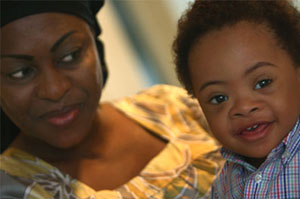
Jeanne d’Arc Kayembe, who came to Washington from Kinshasha, Congo, as a tourist, suffered pregnancy complications and was told to stay in bed until the baby was born. She struggled to oversee the medical care for her sick son while also trying to find a way to stay in the United States. Officials at Children’s National Medical Center helped her apply for asylum. (Susan Biddle/Washington Post)

For Jeanne d’Arc Kayembe, the trip to Washington in May 2007 was meant to be a month-long respite from an abusive boyfriend and a chance to visit relatives before going home to the Democratic Republic of the Congo to have her first child.

But searing abdominal pains sent Kayembe, who was six months pregnant, to Shady Grove Adventist Hospital. After relieving her pain, a doctor told her to stay in bed and not return to Kinshasa until after she had delivered her baby.

The Shady Grove emergency room was the entry point for Kayembe, who spoke almost no English and had little money, to a foreign medical system that was, by turns, both frightening and surprisingly welcoming.

Kayembe gave birth at Shady Grove to a very sick son, Don Emmanuel, who eventually got more than $1 million worth of care, mostly at Children’s National Medical Center. U.S. taxpayers and the hospitals footed the bill.

In some ways, Kayembe and her son are at the white-hot intersection of immigration and health care. But Kayembe’s case doesn’t fit neatly into those political and policy battles, which often focus on undocumented immigrants. An employee of Congo’s telecommunications agency, she came to the U.S. legally, on a tourist visa. And because her son was born here, he became a U.S. citizen and thus was entitled to Medicaid, like any poor child.

To Mark Krikorian, executive director of the Center for Immigration Studies, a Washington think tank that supports tighter immigration controls, Kayembe’s case suggests that rules for entering the United States ought to be toughened. He questions the wisdom of admitting a woman who was six months pregnant and from a country with a primitive health system. (Visa applicants are not asked whether they are pregnant.) 

“The basic question when you’re looking at the intersection of health care and immigration is the selection of whom to admit,” he said. “Once you admit somebody, the game is up.” Lawmakers, he said, “need to be a little more demanding in this area.”

But Adam Gurvitch, a consultant to the National Immigration Law Center, which advocates for the rights of low-income immigrants, disagreed. He said that U.S. officials already have a screening process for visas that is highly subjective and rejects many more applicants from poor countries than from Western Europe or Japan. He added that “we would never accept such prohibitions for Americans” wanting to go overseas.

As the debate ensues, legal and undocumented immigrants continue to show up in emergency rooms, where hospitals are required by federal law to treat and stabilize them. In Kayembe’s case, medical staff helped in crucial ways that went far beyond health issues.

Alone — And Crushed

After Kayembe’s first visit to Shady Grove, she followed the doctor’s advice, staying at the Germantown home of her nephew, 23. Much of the time she was alone. When Kayembe, then 39, gave birth in August 2007, she was crushed to learn that her son had two heart defects and suffered from congenital developmental issues.

“I was happy when the baby was born, but then the happy left when the nurse told me he had a heart problem,” Kayembe said in an interview. “I said, ‘Why, my God?’ and I cried all day.”

The baby remained in the intensive care unit at Shady Grove for two weeks, but he needed specialized care, including a cardiac catheterization to repair a ventricular problem and a hole in his heart. Doctors decided the surgery should take place at Children’s after the baby grew a bit stronger.

Over the next several months, Don Emmanuel’s health deteriorated. He suffered from congestive heart failure, his breathing was labored and his heartbeat irregular. He was repeatedly hospitalized and once was flown by helicopter from Shady Grove to Children’s for emergency treatment.

In January 2008 doctors at Children’s successfully operated on the 5-month-old. But the baby had high blood pressure in the lungs, hypothyroidism and other problems that required in-hospital follow-up care.Ìý

Pregnant African Tourist Gets Support, Costly Treatment From U.S. Health Care System

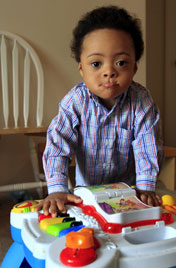
Don Emmanuel Kayembe no longer requires oxygen at night and doctors say his heart problems have improved markedly. (Susan Biddle/Washington Post)

The cost of the Shady Grove care was $32,000; most of that amount was covered by Don Emmanuel’s Medicaid, while Kayembe’s lesser charges were absorbed by the hospital as uncompensated care. Children’s officials say Medicaid eventually picked up a little less than half of the baby’s $1 million tab, with the hospital absorbing the rest.
Children’s is known as a place where legal and illegal immigrants, as well as American citizens with little money, can bring their children for top-notch care. In some cases, parents from other countries bring kids to the emergency room directly from the airport, hospital administrators say.

But that comes at a price. Children’s, like many other hospitals, doesn’t keep track of how much uncompensated care they provide to noncitizens, documented or undocumented, but they said it is significant. The hospital once spent $3 million treating an illegal immigrant child with leukemia, officials say.

The federal government helps subsidize uncompensated care by providing $11 billion through a Medicaid program that assists hospitals with a disproportionate number of low-income patients. But that doesn’t cover the entire need. Hospitals often turn to charities for help or pass the cost of uncompensated care along in higher prices to patients who do have insurance.Ìý

Out Of Options

Kayembe, struggling to oversee her son’s care, found that the people treating Don Emmanuel began to look after her, too.
Facing the expiration of the standard six-month tourist visa, Kayembe was terrified that she would be forced to return to Congo without her son. But just weeks before her visa was set to expire, social workers and doctors at Children’s wrote to the Department of Homeland Security’s Bureau of Citizenship and Immigration Services, explaining that she needed to stay in the country with her child while he received treatment. The agency granted an extension for another six months.

A social worker at Children’s, believing Kayembe might be eligible for asylum because she said she’d been abused by her boyfriend in Congo, e-mailed the Center for Applied Legal Studies at Georgetown University Law Center, requesting pro bono assistance for Kayembe.Ìý 

Liz Keyes, a French-speaking attorney with Women Empowered Against Violence, a Washington nonprofit organization, decided to take the case.

Even Keyes, an experienced immigration lawyer, was surprised that the hospital had gone to such lengths to find legal help for Kayembe.
“I’ve never seen anything like it,” said Keyes. “I think what was driving it was this child, who was doing well but couldn’t do well if he was taken overseas or if his mother was distracted by overstaying her visa. They had to take care of mom’s immigration issues.”

There was little time to spare. Keyes tracked down family members and a priest in Congo who could provide affidavits about the alleged abuse, which was linked to ethnic discrimination. They said that Kayembe’s boyfriend, who was from a different Congolese ethnic group, had not wanted her to have a “mixed-blood” son. He had pressed her to have an abortion and made threatening comments about the child.

Kayembe, meanwhile, was distraught about the baby’s medical problems. “She would cry,” said Deneen Heath, the cardiologist at Children’s who treated the baby for congestive heart failure and other complications. “She never thought she would have a child with all these problems.”

Using her rusty French, Heath gleaned that Kayembe was having trouble getting back and forth from Germantown, so she set up a cot in the baby’s room and got permission for Kayembe to eat for free in the hospital cafeteria while Don Emmanuel received treatment.

In June 2008, Kayembe received asylum status, which Gurvitch of the National Immigration Law Center called “quite exceptional.” He said that her son’s U.S. citizenship didn’t confer any rights on his mother.

Today Kayembe is learning English and looking for a job while receiving aid from groups that help people who have been granted asylum. Her son is a smiling, chatty toddler. He no longer requires oxygen at night, and doctors say his heart problems have improved markedly.

Kayembe today recalls the kindness of the doctors and social workers. “I was so surprised because I never imagined somebody would help me like that,” she said through an interpreter. “They gave me so much.”

ºÚÁϳԹÏÍø News is a national newsroom that produces in-depth journalism about health issues and is one of the core operating programs at KFF—an independent source of health policy research, polling, and journalism. Learn more about .

This <a target="_blank" href="/news/immigrant-baby/">article</a&gt; first appeared on <a target="_blank" href="">KFF Health News</a> and is republished here under a <a target="_blank" href=" Commons Attribution-NonCommercial-NoDerivatives 4.0 International License</a>.<img src="/wp-content/uploads/sites/8/2023/04/kffhealthnews-icon.png?w=150&quot; style="width:1em;height:1em;margin-left:10px;">

<img id="republication-tracker-tool-source" src="/?republication-pixel=true&post=32115&amp;ga4=G-J74WWTKFM0&quot; style="width:1px;height:1px;">]]>
/news/immigrant-baby/feed/ 0 32115
Growing Immigrant Population Spurs Demand For Medical Interpreters /health-industry/medical-interpreters/ /health-industry/medical-interpreters/#respond Tue, 21 Apr 2009 00:00:00 +0000 http://khn.wp.alley.ws/news/medical-interpreters/

This story is a collaboration between Kaiser Health News and .

“Devil, devil,” the man muttered.

Sabyasachi Kar, a doctor at Washington Adventist Hospital in Takoma Park, shook his head in bewilderment. He was examining a Spanish-speaking patient with the help of a colleague who barely spoke the language, and he was getting nowhere.

“It was frustrating. I couldn’t do my job,” Kar recalled. Only the next day, when he returned with a bilingual colleague, did Kar learn the man had been saying he felt “debil,” or weak.

As immigrant communities swell around the country, hospitals, clinics and health-care providers are increasingly confronted with language and cultural challenges that can discourage people from seeking care and lead to calamitous errors in diagnoses and treatment regimens.

In the Washington area, a sharp rise of the foreign-born population in the past two decades has been met by a patchwork response in the medical field. Many area hospitals have taken steps such as installing phones to connect patients and staff members to interpreters, hiring interpreters or training employees to do the job, and recruiting bilingual staff. But some large physician practices and small primary and specialty care services have not added language or cultural services.

“All providers in this area should . . . have a mechanism to deal with language barriers,” said Isabel van Isschot, director of interpretation services at La Clinica del Pueblo in Washington, which supplies interpreters to health facilities. When patients don’t have access to an interpreter, she said, “I think that’s a form of discrimination.”

Need An Interpreter?

Consider your options:

  • Most area hospitals, medical centers and local government health services have in-house interpreters and/or use a local interpretation agency or telephone service.ÌýCall ahead to verify the availability of an interpreter. (Spanish-speakers who call typically are transferred to a Spanish-speaking operator.)
  • Most independent primary-and specialty-care providers do not have staff interpreters but may use phone interpretation services, such as .Ìý
  • Some organizations and programs supply free assistance. In the District, La Clinica del Pueblo, 202-462-4788, will arrange for interpreters in various languages to accompany patients to appointments. In Montgomery County, Asian-language speakers can call the Asian American Health Initiative, 301-760-4993.
  • Patients have the right to an interpreter under federal law.Ìý Complaints about violations may be made to the at the Department of Health and Human Services.

Hospitals and doctors, however, are wary of the cost of interpretation services, which can run up to $190 an hour; they say the government, not them, should pay these costs.

“Appropriate funding for these services is needed so that patients don’t lose access to care,” said Joseph M. Heyman, chair of the board of trustees of the American Medical Association, which has asserted in policy statements that “physicians cannot be expected to provide and fund . . . translation services for their patients.”

A 45-year-old federal civil rights law requires hospitals and doctors who accept federal funds to offer language services. Some federal funding for interpretation services is available through Medicaid and the Children’s Health Insurance Program, state-run programs that serve the poor and children, respectively. But to obtain the money, states have to pitch in some of their own. The District and Virginia have done so; Maryland has not.

California alone has put the funding burden on private insurers for patients who have that coverage. Some other states are considering similar legislation, but the issue is not a political priority in the Washington area, advocates say, even though about 20 percent of residents in the region are foreign-born, according to the Urban Institute, a nonpartisan think tank. Some 110 languages are spoken here, an analysis of 2000 Census data by the U.S. English Foundation found, making the Washington area the sixth most linguistically diverse urban area in the United States.

Though many immigrants speak enough English to get by in their workplace, that may not be sufficient in the doctor’s office, where medical jargon and emotional reactions can cloud their ability to communicate.

Norma Chinchilla, 26, a Honduran immigrant living in Silver Spring, has been in the United States for four years but has not learned English. Last year, she ran smack into the language barrier while trying to make an appointment over the phone for her 2-year-old son. When she reached an English-only operator at Children’s National Medical Center, the few English words she knew seemed to vaporize as the impatience on the other end of the line grew. She hung up, defeated and without an appointment.

“It has been very hard to get medical care for my son without speaking English,” Chinchilla said.

Paula Darte, public relations director for the center, says it does have a language services office. “It’s troubling that this person didn’t get through the right channels, because there’s usually someone around who speaks Spanish,” she said.

Patients with limited or no English who do manage to obtain care can still fall prey to miscommunication. In a 2006 study published in the New England Journal of Medicine, Glenn Flores, now a professor of pediatrics at the University of Texas Southwestern Medical Center at Dallas, detailed several such cases. In one, a mother misunderstood instructions and put oral antibiotics in a child’s ears. In another, a doctor not fluent in Spanish interpreted “she hit herself” as “I hit her,” resulting in a mother’s losing custody of her children.

Some interpreters say medical staff sometimes are unsympathetic to immigrants’ needs. “There is a lot of prejudice and animosity,” said Rosemary Rodriguez, an interpreter in Richmond. “Nurses say to me, ‘Why don’t they learn English?’ or ‘I know she speaks English.’ “

To address the language barrier, many area hospitals have installed an array of options. Adventist HealthCare, the parent of Washington Adventist Hospital, has provided medical interpretation and cultural competency training to 150 of its bilingual nurses, janitors, technicians and other staff members.

Kar, the physician who once found it frustrating trying to communicate with Spanish-speakers, says he can now call in a trained bilingual colleague for assistance. And if he has a patient who speaks a rare language, such as Bulgarian, he uses a special phone to reach professional interpreters.

Howard University Hospital has two full-time Spanish interpreters; one full-time Amharic, Tigrinya and French interpreter for the Ethiopian, Eritrean and French West African communities; and one full-time Chinese interpreter.

They also interpret cultural differences. Azeb Abraham, Howard’s Amharic, Tigrinya and French interpreter, says some Ethiopian and Eritrean women feel uncomfortable undressed in the presence of male doctors, so she helps the doctors figure out how to examine the women in a way that does not offend them.

Inova Fairfax Hospital in Falls Church has several full-time interpreters and 700 staff members trained to interpret on the fly in some 35 languages.

Alicia Ellis, one of Inova Fairfax’s full-time medical interpreters, recently got a call for help with a pregnant Nicaraguan woman complaining of vaginal bleeding.

Ellis hurried into a labor and delivery ward to find Juana Varela, 36, lying on her back, her ample belly protruding between the top and bottom of her hospital gown. Ellis explained she was there to interpret for Colleen Pineda, the nurse who would perform the preliminary examination. Ellis began to speak for Varela: “I woke up in the morning with pain and bleeding, and now I’m worried this birth won’t be normal.”

“When did the pain begin?” Pineda asked in English. Ellis repeated the question to Varela in Spanish, her eyes cast down to deflect attention from herself and create a seamless link between doctor and patient.

Other health-care organizations have been slower to invest in interpretation services. George Washington University Medical Faculty Associates, a practice that sees about 4,600 patients per day (more than five times the number treated at Inova Fairfax), has no full-time staff interpreters but a few bilingual staff members. According to the group’s chief executive, Stephen Badger, “The cost of interpreters is expensive and usually is greater than the payment we receive [from Medicaid] for the health care actually provided.”

Montgomery County provides professional medical interpreters to clinics at no cost, according to Sonia Mora, manager of the Latino Health Initiative at the county’s Department of Health and Human Services.

Mora says that there is still a tremendous need in immigrant communities that is not being met and that providers who do have capacity have a huge burden thrust on them. But, she says, she has seen language services improve significantly in the last five years. “Now we’re starting to see that it’s going to save us money, because people are going to be healthier,” she said.

ºÚÁϳԹÏÍø News is a national newsroom that produces in-depth journalism about health issues and is one of the core operating programs at KFF—an independent source of health policy research, polling, and journalism. Learn more about .

This <a target="_blank" href="/health-industry/medical-interpreters/">article</a&gt; first appeared on <a target="_blank" href="">KFF Health News</a> and is republished here under a <a target="_blank" href=" Commons Attribution-NonCommercial-NoDerivatives 4.0 International License</a>.<img src="/wp-content/uploads/sites/8/2023/04/kffhealthnews-icon.png?w=150&quot; style="width:1em;height:1em;margin-left:10px;">

<img id="republication-tracker-tool-source" src="/?republication-pixel=true&post=20746&amp;ga4=G-J74WWTKFM0&quot; style="width:1px;height:1px;">]]>
/health-industry/medical-interpreters/feed/ 0 20746
Eliza Barclay, Author at ºÚÁϳԹÏÍø News ºÚÁϳԹÏÍø News produces in-depth journalism on health issues and is a core operating program of KFF. Thu, 16 Apr 2026 06:26:39 +0000 en-US hourly 1 https://wordpress.org/?v=6.8.5 /wp-content/uploads/sites/8/2023/04/kffhealthnews-icon.png?w=32 Eliza Barclay, Author at ºÚÁϳԹÏÍø News 32 32 161476233 Pregnant African Tourist Gets Support, Costly Treatment From U.S. Health Care System /news/immigrant-baby/ /news/immigrant-baby/#respond Tue, 05 Jan 2010 00:00:00 +0000 http://khn.wp.alley.ws/news/immigrant-baby/

Produced in collaboration with

Pregnant African Tourist Gets Support, Costly Treatment From U.S. Health Care System

Jeanne d’Arc Kayembe, who came to Washington from Kinshasha, Congo, as a tourist, suffered pregnancy complications and was told to stay in bed until the baby was born. She struggled to oversee the medical care for her sick son while also trying to find a way to stay in the United States. Officials at Children’s National Medical Center helped her apply for asylum. (Susan Biddle/Washington Post)

For Jeanne d’Arc Kayembe, the trip to Washington in May 2007 was meant to be a month-long respite from an abusive boyfriend and a chance to visit relatives before going home to the Democratic Republic of the Congo to have her first child.

But searing abdominal pains sent Kayembe, who was six months pregnant, to Shady Grove Adventist Hospital. After relieving her pain, a doctor told her to stay in bed and not return to Kinshasa until after she had delivered her baby.

The Shady Grove emergency room was the entry point for Kayembe, who spoke almost no English and had little money, to a foreign medical system that was, by turns, both frightening and surprisingly welcoming.

Kayembe gave birth at Shady Grove to a very sick son, Don Emmanuel, who eventually got more than $1 million worth of care, mostly at Children’s National Medical Center. U.S. taxpayers and the hospitals footed the bill.

In some ways, Kayembe and her son are at the white-hot intersection of immigration and health care. But Kayembe’s case doesn’t fit neatly into those political and policy battles, which often focus on undocumented immigrants. An employee of Congo’s telecommunications agency, she came to the U.S. legally, on a tourist visa. And because her son was born here, he became a U.S. citizen and thus was entitled to Medicaid, like any poor child.

To Mark Krikorian, executive director of the Center for Immigration Studies, a Washington think tank that supports tighter immigration controls, Kayembe’s case suggests that rules for entering the United States ought to be toughened. He questions the wisdom of admitting a woman who was six months pregnant and from a country with a primitive health system. (Visa applicants are not asked whether they are pregnant.) 

“The basic question when you’re looking at the intersection of health care and immigration is the selection of whom to admit,” he said. “Once you admit somebody, the game is up.” Lawmakers, he said, “need to be a little more demanding in this area.”

But Adam Gurvitch, a consultant to the National Immigration Law Center, which advocates for the rights of low-income immigrants, disagreed. He said that U.S. officials already have a screening process for visas that is highly subjective and rejects many more applicants from poor countries than from Western Europe or Japan. He added that “we would never accept such prohibitions for Americans” wanting to go overseas.

As the debate ensues, legal and undocumented immigrants continue to show up in emergency rooms, where hospitals are required by federal law to treat and stabilize them. In Kayembe’s case, medical staff helped in crucial ways that went far beyond health issues.

Alone — And Crushed

After Kayembe’s first visit to Shady Grove, she followed the doctor’s advice, staying at the Germantown home of her nephew, 23. Much of the time she was alone. When Kayembe, then 39, gave birth in August 2007, she was crushed to learn that her son had two heart defects and suffered from congenital developmental issues.

“I was happy when the baby was born, but then the happy left when the nurse told me he had a heart problem,” Kayembe said in an interview. “I said, ‘Why, my God?’ and I cried all day.”

The baby remained in the intensive care unit at Shady Grove for two weeks, but he needed specialized care, including a cardiac catheterization to repair a ventricular problem and a hole in his heart. Doctors decided the surgery should take place at Children’s after the baby grew a bit stronger.

Over the next several months, Don Emmanuel’s health deteriorated. He suffered from congestive heart failure, his breathing was labored and his heartbeat irregular. He was repeatedly hospitalized and once was flown by helicopter from Shady Grove to Children’s for emergency treatment.

In January 2008 doctors at Children’s successfully operated on the 5-month-old. But the baby had high blood pressure in the lungs, hypothyroidism and other problems that required in-hospital follow-up care.Ìý

Pregnant African Tourist Gets Support, Costly Treatment From U.S. Health Care System

Don Emmanuel Kayembe no longer requires oxygen at night and doctors say his heart problems have improved markedly. (Susan Biddle/Washington Post)

The cost of the Shady Grove care was $32,000; most of that amount was covered by Don Emmanuel’s Medicaid, while Kayembe’s lesser charges were absorbed by the hospital as uncompensated care. Children’s officials say Medicaid eventually picked up a little less than half of the baby’s $1 million tab, with the hospital absorbing the rest.
Children’s is known as a place where legal and illegal immigrants, as well as American citizens with little money, can bring their children for top-notch care. In some cases, parents from other countries bring kids to the emergency room directly from the airport, hospital administrators say.

But that comes at a price. Children’s, like many other hospitals, doesn’t keep track of how much uncompensated care they provide to noncitizens, documented or undocumented, but they said it is significant. The hospital once spent $3 million treating an illegal immigrant child with leukemia, officials say.

The federal government helps subsidize uncompensated care by providing $11 billion through a Medicaid program that assists hospitals with a disproportionate number of low-income patients. But that doesn’t cover the entire need. Hospitals often turn to charities for help or pass the cost of uncompensated care along in higher prices to patients who do have insurance.Ìý

Out Of Options

Kayembe, struggling to oversee her son’s care, found that the people treating Don Emmanuel began to look after her, too.
Facing the expiration of the standard six-month tourist visa, Kayembe was terrified that she would be forced to return to Congo without her son. But just weeks before her visa was set to expire, social workers and doctors at Children’s wrote to the Department of Homeland Security’s Bureau of Citizenship and Immigration Services, explaining that she needed to stay in the country with her child while he received treatment. The agency granted an extension for another six months.

A social worker at Children’s, believing Kayembe might be eligible for asylum because she said she’d been abused by her boyfriend in Congo, e-mailed the Center for Applied Legal Studies at Georgetown University Law Center, requesting pro bono assistance for Kayembe.Ìý 

Liz Keyes, a French-speaking attorney with Women Empowered Against Violence, a Washington nonprofit organization, decided to take the case.

Even Keyes, an experienced immigration lawyer, was surprised that the hospital had gone to such lengths to find legal help for Kayembe.
“I’ve never seen anything like it,” said Keyes. “I think what was driving it was this child, who was doing well but couldn’t do well if he was taken overseas or if his mother was distracted by overstaying her visa. They had to take care of mom’s immigration issues.”

There was little time to spare. Keyes tracked down family members and a priest in Congo who could provide affidavits about the alleged abuse, which was linked to ethnic discrimination. They said that Kayembe’s boyfriend, who was from a different Congolese ethnic group, had not wanted her to have a “mixed-blood” son. He had pressed her to have an abortion and made threatening comments about the child.

Kayembe, meanwhile, was distraught about the baby’s medical problems. “She would cry,” said Deneen Heath, the cardiologist at Children’s who treated the baby for congestive heart failure and other complications. “She never thought she would have a child with all these problems.”

Using her rusty French, Heath gleaned that Kayembe was having trouble getting back and forth from Germantown, so she set up a cot in the baby’s room and got permission for Kayembe to eat for free in the hospital cafeteria while Don Emmanuel received treatment.

In June 2008, Kayembe received asylum status, which Gurvitch of the National Immigration Law Center called “quite exceptional.” He said that her son’s U.S. citizenship didn’t confer any rights on his mother.

Today Kayembe is learning English and looking for a job while receiving aid from groups that help people who have been granted asylum. Her son is a smiling, chatty toddler. He no longer requires oxygen at night, and doctors say his heart problems have improved markedly.

Kayembe today recalls the kindness of the doctors and social workers. “I was so surprised because I never imagined somebody would help me like that,” she said through an interpreter. “They gave me so much.”

ºÚÁϳԹÏÍø News is a national newsroom that produces in-depth journalism about health issues and is one of the core operating programs at KFF—an independent source of health policy research, polling, and journalism. Learn more about .

This <a target="_blank" href="/news/immigrant-baby/">article</a&gt; first appeared on <a target="_blank" href="">KFF Health News</a> and is republished here under a <a target="_blank" href=" Commons Attribution-NonCommercial-NoDerivatives 4.0 International License</a>.<img src="/wp-content/uploads/sites/8/2023/04/kffhealthnews-icon.png?w=150&quot; style="width:1em;height:1em;margin-left:10px;">

<img id="republication-tracker-tool-source" src="/?republication-pixel=true&post=32115&amp;ga4=G-J74WWTKFM0&quot; style="width:1px;height:1px;">]]>
/news/immigrant-baby/feed/ 0 32115
Growing Immigrant Population Spurs Demand For Medical Interpreters /health-industry/medical-interpreters/ /health-industry/medical-interpreters/#respond Tue, 21 Apr 2009 00:00:00 +0000 http://khn.wp.alley.ws/news/medical-interpreters/

This story is a collaboration between Kaiser Health News and .

“Devil, devil,” the man muttered.

Sabyasachi Kar, a doctor at Washington Adventist Hospital in Takoma Park, shook his head in bewilderment. He was examining a Spanish-speaking patient with the help of a colleague who barely spoke the language, and he was getting nowhere.

“It was frustrating. I couldn’t do my job,” Kar recalled. Only the next day, when he returned with a bilingual colleague, did Kar learn the man had been saying he felt “debil,” or weak.

As immigrant communities swell around the country, hospitals, clinics and health-care providers are increasingly confronted with language and cultural challenges that can discourage people from seeking care and lead to calamitous errors in diagnoses and treatment regimens.

In the Washington area, a sharp rise of the foreign-born population in the past two decades has been met by a patchwork response in the medical field. Many area hospitals have taken steps such as installing phones to connect patients and staff members to interpreters, hiring interpreters or training employees to do the job, and recruiting bilingual staff. But some large physician practices and small primary and specialty care services have not added language or cultural services.

“All providers in this area should . . . have a mechanism to deal with language barriers,” said Isabel van Isschot, director of interpretation services at La Clinica del Pueblo in Washington, which supplies interpreters to health facilities. When patients don’t have access to an interpreter, she said, “I think that’s a form of discrimination.”

Need An Interpreter?

Consider your options:

  • Most area hospitals, medical centers and local government health services have in-house interpreters and/or use a local interpretation agency or telephone service.ÌýCall ahead to verify the availability of an interpreter. (Spanish-speakers who call typically are transferred to a Spanish-speaking operator.)
  • Most independent primary-and specialty-care providers do not have staff interpreters but may use phone interpretation services, such as .Ìý
  • Some organizations and programs supply free assistance. In the District, La Clinica del Pueblo, 202-462-4788, will arrange for interpreters in various languages to accompany patients to appointments. In Montgomery County, Asian-language speakers can call the Asian American Health Initiative, 301-760-4993.
  • Patients have the right to an interpreter under federal law.Ìý Complaints about violations may be made to the at the Department of Health and Human Services.

Hospitals and doctors, however, are wary of the cost of interpretation services, which can run up to $190 an hour; they say the government, not them, should pay these costs.

“Appropriate funding for these services is needed so that patients don’t lose access to care,” said Joseph M. Heyman, chair of the board of trustees of the American Medical Association, which has asserted in policy statements that “physicians cannot be expected to provide and fund . . . translation services for their patients.”

A 45-year-old federal civil rights law requires hospitals and doctors who accept federal funds to offer language services. Some federal funding for interpretation services is available through Medicaid and the Children’s Health Insurance Program, state-run programs that serve the poor and children, respectively. But to obtain the money, states have to pitch in some of their own. The District and Virginia have done so; Maryland has not.

California alone has put the funding burden on private insurers for patients who have that coverage. Some other states are considering similar legislation, but the issue is not a political priority in the Washington area, advocates say, even though about 20 percent of residents in the region are foreign-born, according to the Urban Institute, a nonpartisan think tank. Some 110 languages are spoken here, an analysis of 2000 Census data by the U.S. English Foundation found, making the Washington area the sixth most linguistically diverse urban area in the United States.

Though many immigrants speak enough English to get by in their workplace, that may not be sufficient in the doctor’s office, where medical jargon and emotional reactions can cloud their ability to communicate.

Norma Chinchilla, 26, a Honduran immigrant living in Silver Spring, has been in the United States for four years but has not learned English. Last year, she ran smack into the language barrier while trying to make an appointment over the phone for her 2-year-old son. When she reached an English-only operator at Children’s National Medical Center, the few English words she knew seemed to vaporize as the impatience on the other end of the line grew. She hung up, defeated and without an appointment.

“It has been very hard to get medical care for my son without speaking English,” Chinchilla said.

Paula Darte, public relations director for the center, says it does have a language services office. “It’s troubling that this person didn’t get through the right channels, because there’s usually someone around who speaks Spanish,” she said.

Patients with limited or no English who do manage to obtain care can still fall prey to miscommunication. In a 2006 study published in the New England Journal of Medicine, Glenn Flores, now a professor of pediatrics at the University of Texas Southwestern Medical Center at Dallas, detailed several such cases. In one, a mother misunderstood instructions and put oral antibiotics in a child’s ears. In another, a doctor not fluent in Spanish interpreted “she hit herself” as “I hit her,” resulting in a mother’s losing custody of her children.

Some interpreters say medical staff sometimes are unsympathetic to immigrants’ needs. “There is a lot of prejudice and animosity,” said Rosemary Rodriguez, an interpreter in Richmond. “Nurses say to me, ‘Why don’t they learn English?’ or ‘I know she speaks English.’ “

To address the language barrier, many area hospitals have installed an array of options. Adventist HealthCare, the parent of Washington Adventist Hospital, has provided medical interpretation and cultural competency training to 150 of its bilingual nurses, janitors, technicians and other staff members.

Kar, the physician who once found it frustrating trying to communicate with Spanish-speakers, says he can now call in a trained bilingual colleague for assistance. And if he has a patient who speaks a rare language, such as Bulgarian, he uses a special phone to reach professional interpreters.

Howard University Hospital has two full-time Spanish interpreters; one full-time Amharic, Tigrinya and French interpreter for the Ethiopian, Eritrean and French West African communities; and one full-time Chinese interpreter.

They also interpret cultural differences. Azeb Abraham, Howard’s Amharic, Tigrinya and French interpreter, says some Ethiopian and Eritrean women feel uncomfortable undressed in the presence of male doctors, so she helps the doctors figure out how to examine the women in a way that does not offend them.

Inova Fairfax Hospital in Falls Church has several full-time interpreters and 700 staff members trained to interpret on the fly in some 35 languages.

Alicia Ellis, one of Inova Fairfax’s full-time medical interpreters, recently got a call for help with a pregnant Nicaraguan woman complaining of vaginal bleeding.

Ellis hurried into a labor and delivery ward to find Juana Varela, 36, lying on her back, her ample belly protruding between the top and bottom of her hospital gown. Ellis explained she was there to interpret for Colleen Pineda, the nurse who would perform the preliminary examination. Ellis began to speak for Varela: “I woke up in the morning with pain and bleeding, and now I’m worried this birth won’t be normal.”

“When did the pain begin?” Pineda asked in English. Ellis repeated the question to Varela in Spanish, her eyes cast down to deflect attention from herself and create a seamless link between doctor and patient.

Other health-care organizations have been slower to invest in interpretation services. George Washington University Medical Faculty Associates, a practice that sees about 4,600 patients per day (more than five times the number treated at Inova Fairfax), has no full-time staff interpreters but a few bilingual staff members. According to the group’s chief executive, Stephen Badger, “The cost of interpreters is expensive and usually is greater than the payment we receive [from Medicaid] for the health care actually provided.”

Montgomery County provides professional medical interpreters to clinics at no cost, according to Sonia Mora, manager of the Latino Health Initiative at the county’s Department of Health and Human Services.

Mora says that there is still a tremendous need in immigrant communities that is not being met and that providers who do have capacity have a huge burden thrust on them. But, she says, she has seen language services improve significantly in the last five years. “Now we’re starting to see that it’s going to save us money, because people are going to be healthier,” she said.

ºÚÁϳԹÏÍø News is a national newsroom that produces in-depth journalism about health issues and is one of the core operating programs at KFF—an independent source of health policy research, polling, and journalism. Learn more about .

This <a target="_blank" href="/health-industry/medical-interpreters/">article</a&gt; first appeared on <a target="_blank" href="">KFF Health News</a> and is republished here under a <a target="_blank" href=" Commons Attribution-NonCommercial-NoDerivatives 4.0 International License</a>.<img src="/wp-content/uploads/sites/8/2023/04/kffhealthnews-icon.png?w=150&quot; style="width:1em;height:1em;margin-left:10px;">

<img id="republication-tracker-tool-source" src="/?republication-pixel=true&post=20746&amp;ga4=G-J74WWTKFM0&quot; style="width:1px;height:1px;">]]>
/health-industry/medical-interpreters/feed/ 0 20746