
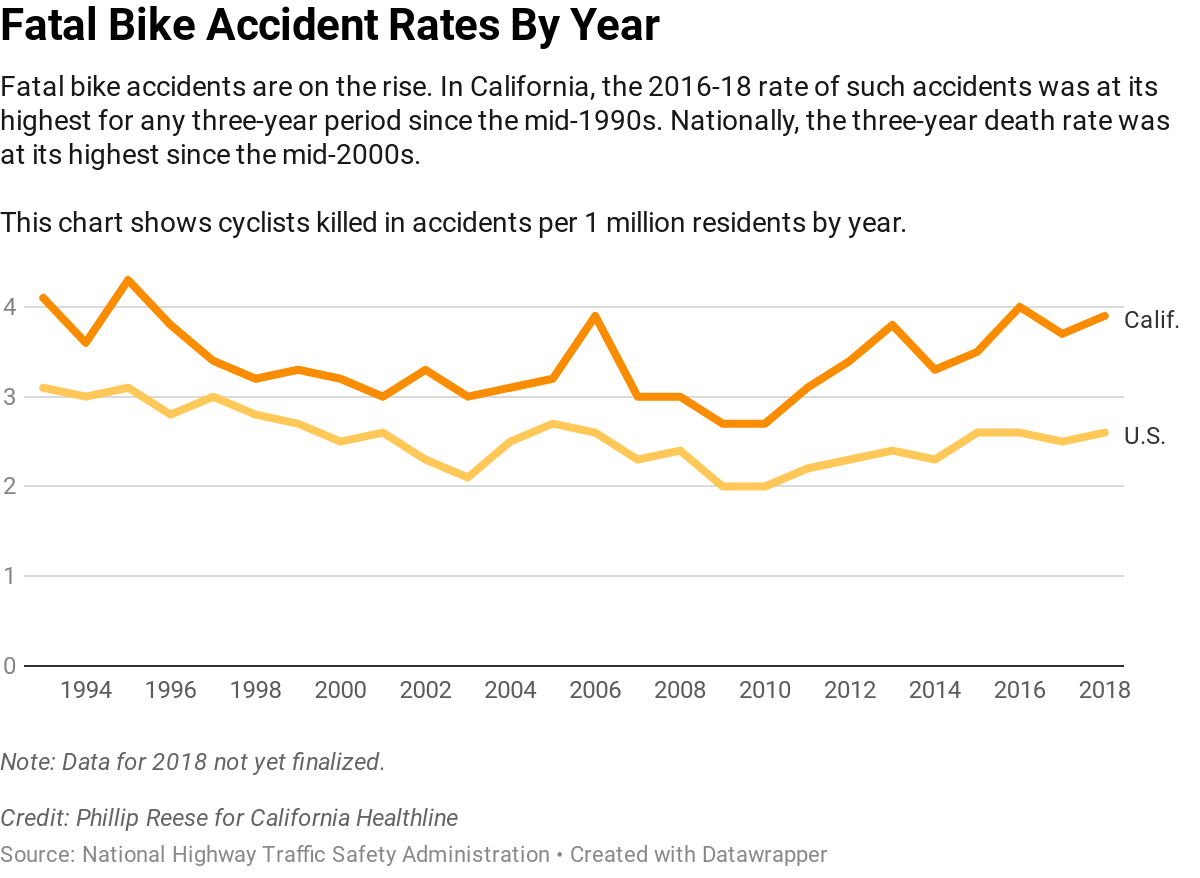
Alongside the surging popularity of bike shares and fitness cycling in California comes a sobering statistic: From 2016 through 2018, more cyclists died in traffic accidents across the state than during any three-year period in the past 25 years.
Traffic accidents killed 455 cyclists in California from 2016 through 2018, according to new data from the National Highway Traffic Safety Administration. The figures translate to about 3.9 bike accident fatalities per million people, the highest rate over any three-year period since the mid-1990s, before many cities built extensive bike networks.
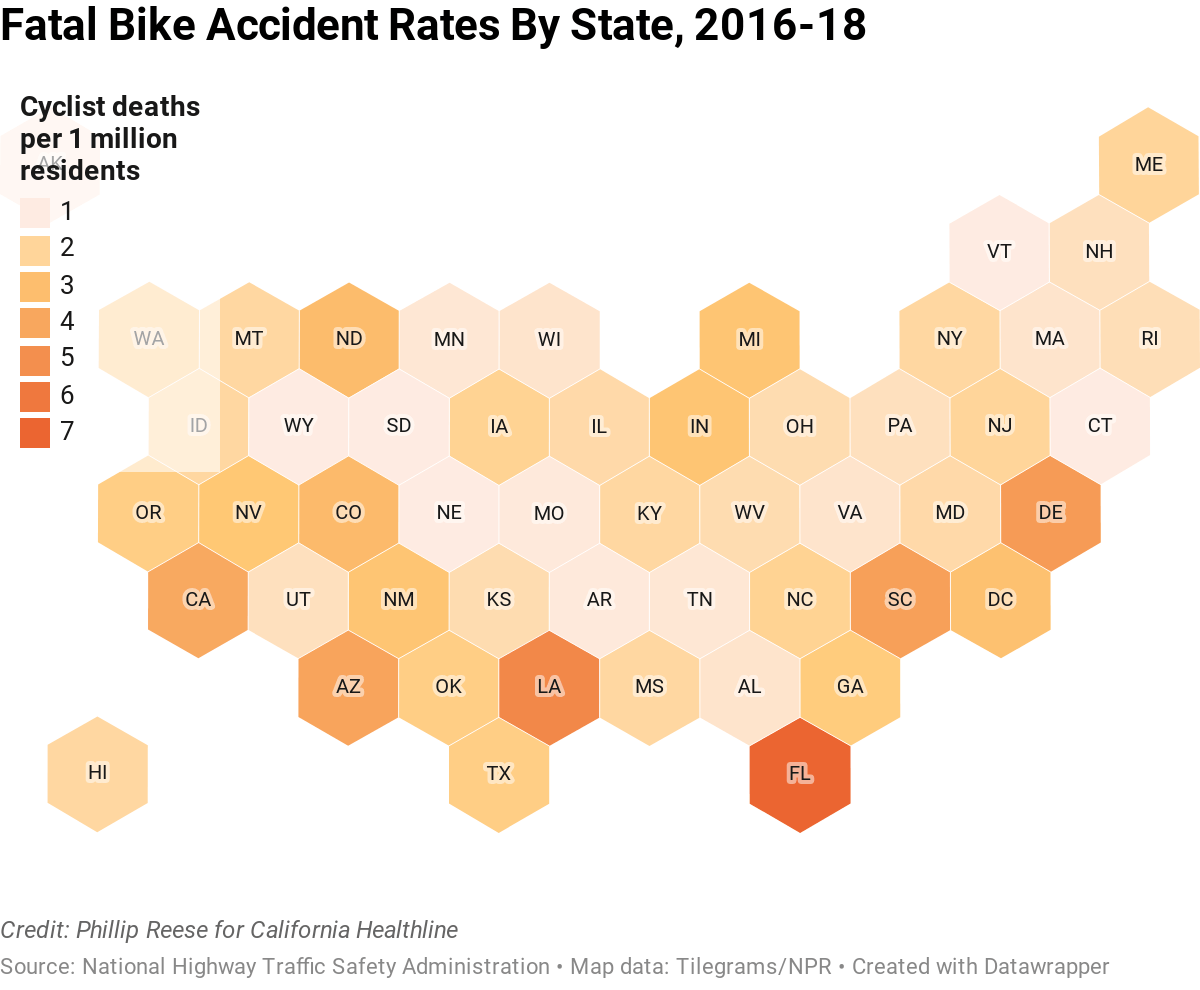
Nationwide, the fatal accident rate was lower, but also on the rise. From 2016 through 2018, 2,516 cyclists died in traffic accidents, a rate of about 2.6 per million people. That was the highest three-year death rate since the mid-2000s.
Experts point to a convergence of factors for the upsurge: a , the and a pronounced consumer shift toward big trucks and . Some analysts also said there are simply more bikes on the road.
鈥淭here鈥檚 definitely been an increase in popularity of cycling,鈥� said Julia Griswold, a researcher at the University of California-Berkeley鈥檚 Safe Transportation Research and Education Center. 鈥淎nd then also since the economy has recovered from the 2008 crash, there鈥檚 been an increase in driving.鈥�

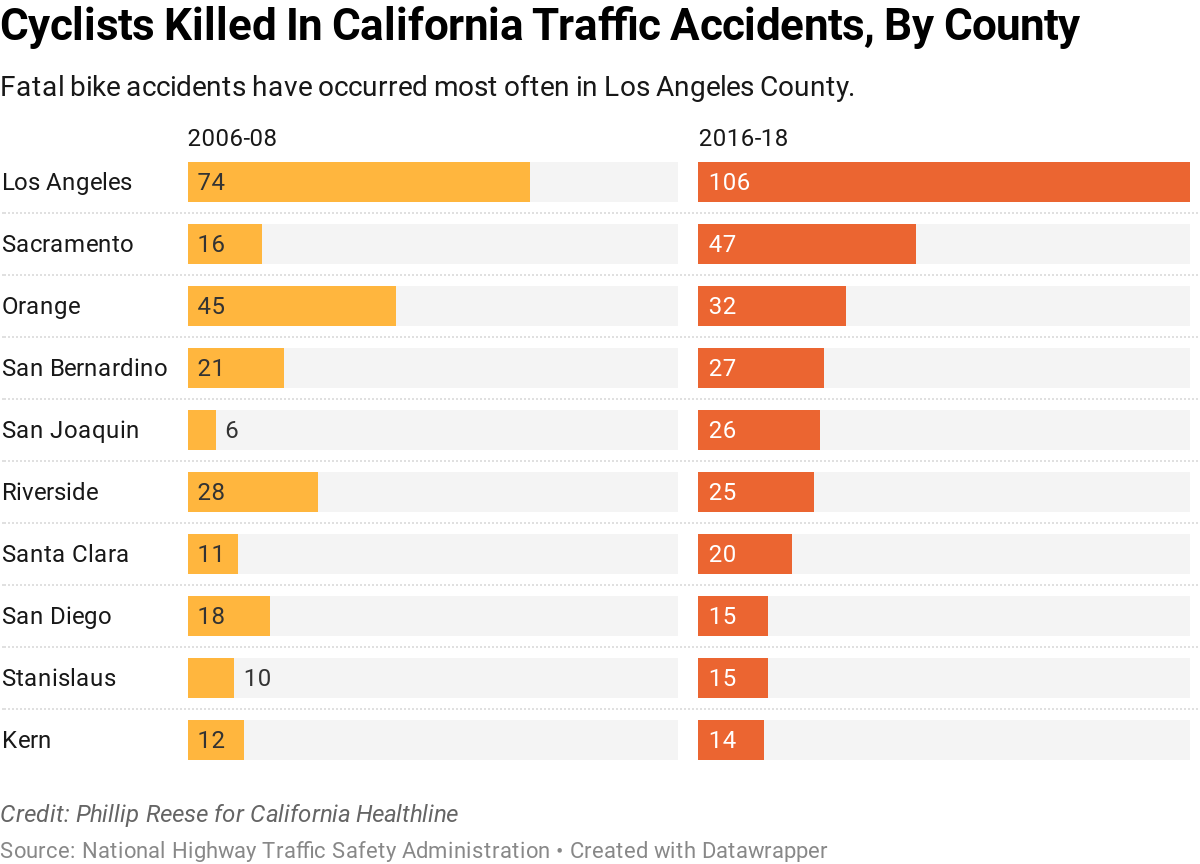
With the unemployment rate near historic lows, more people are commuting to work, intensifying the mix of cars and bikes on city roadways. are now common in many cities. At the same time, the has led to more drivers cruising around waiting for their next pickup.
鈥淭he more people are driving, the higher the probability of an incident,鈥� said Jennifer Boldry, director of research at PeopleForBikes, a national nonprofit that advocates for greater bike access and safety.
Exacerbating the risks: Smartphones are ubiquitous in much of America, and in accidents caused by distracted driving. Boldry cited a by the National Transportation Safety Board showing that 鈥渕idblock鈥� collisions 鈥� wrecks in areas between intersections, where speeds are higher 鈥� tend to cause greater injury to cyclists. Often, drivers involved in those sorts of wrecks say they didn鈥檛 see the cyclist they hit.
鈥淢y conclusion from that is: It鈥檚 really tough to see someone if you鈥檙e looking at your phone,鈥� Boldry said.
In addition, bigger autos like SUVs often have larger blind spots than those of smaller cars, making it more difficult to see a cyclist. They also sit higher, which can affect the area of impact. 鈥淭hink about where an SUV hits you on a bike versus where a very low-riding sedan might hit you,鈥� Boldry said. 鈥淵ou get hit in the leg, the injury is way less severe than if you鈥檙e hit in the chest.鈥�

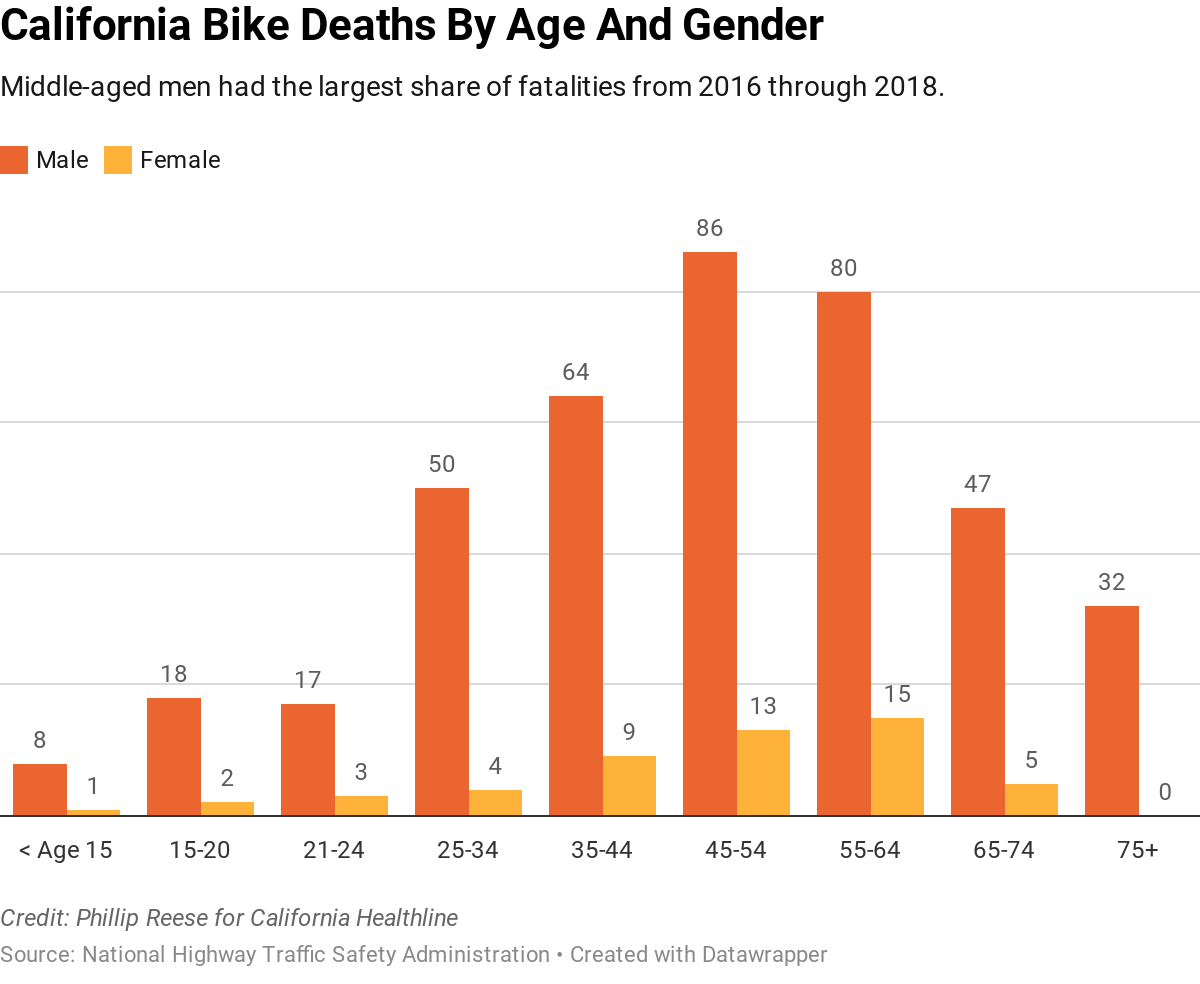
As with other types of fatal accidents involving cars, male cyclists in America die in crashes much more often than women. From 2016 through 2018 in California, almost eight men died in cycling crashes for every woman who died. In the state, men are about twice as likely as women to commute to work by bike, the latest census figures show.
Experts cited several ways to cut the number of bike fatalities, starting with a relatively simple fix: reducing speed limits. 鈥淢ost people are going to survive a crash if they鈥檙e hit at 20 miles an hour,鈥� Griswold said. 鈥淏ut the survival rate drops considerably with each increase in speed above that.鈥�
Investing in appropriate infrastructure 鈥� set up to support a mix of autos, transit, bikes and pedestrians 鈥� is another key. The recent NTSB study calls for increasing the number of separated bike lanes and well-marked intersections. Boldry noted that increased bike ridership, especially when combined with good infrastructure, can actually enhance safety. The reasons for that are unclear, Boldry said, but it could be, in part, because drivers get used to seeing bikes and adopt safer driving behaviors.
Dave Snyder, executive director of the California Bicycle Coalition, or CalBike, said many California cities have made significant progress in improving infrastructure in recent years, resulting in safer roads for cyclists. Still, he said, more needs to be done in more places.
Some people 鈥渟ee 2,000-pound or larger vehicles going 40 to 60 miles per hour within a few feet of them, and they think, 鈥楴o way. That鈥檚 not safe, and it鈥檚 not fun,鈥欌�� Snyder said. 鈥淭here鈥檚 no reason why that has to be. There鈥檚 no reason why we can鈥檛 create networks of bikeways, even on the main streets, that are protected from that high-speed traffic.鈥�
Another way to lower fatalities is through technology. The NTSB report recommends that cyclists use reflective gear and bike helmets. Automobile sensors that can detect objects in a driver鈥檚 blind spot are also a boon, though that technology is sometimes better at seeing cars than at seeing bikes and people.
Boldry said relying extensively on those systems getting better instead of improving infrastructure would be a mistake.
鈥淲e鈥檙e optimistic that will help, but we want to make sure we鈥檙e doing everything we can on the design front to eliminate those conflicts from happening in the first place while we鈥檙e waiting on the technology to get good enough to have a positive impact,鈥� she said.

Phillip Reese is a data reporting specialist and an assistant professor of journalism at California State University-Sacramento.
This story was produced by聽, which publishes聽, an editorially independent service of the聽.