Should聽the聽package set a national standard聽for health plans to聽cover a comprehensive set of benefits?聽Or is it more important聽that states have flexibility to determine what is “essential” based on their own markets. And how do issues of heatlh care costs, affordability and quality fit into the discussion? For months,聽questions like these have been part of the implementation debate.听聽
Answers will begin to take shape with an聽 report, which was requested聽by HHS and is expected to be released in the next weeks.听HHS regulations are expected to follow later this fall.听
In the mean time, KHN asked a group of experts what聽core principles聽should steer the development of this rule if it is to both benefit consumers and the marketplace.听Commentaries聽follow from Utah Rep. James Dunnigan; A. Mark Fendrick, who directs the University of Michigan Center for Value-Based Insurance Design;聽and Debra L. Ness, president of the National Partnership for Women & Families.听聽
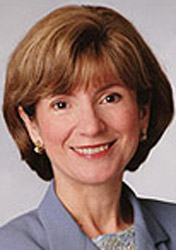
Ness
The Essential Benefit Package Americans Need
Debra L. Ness writes: “The development of this package is a balancing act between making sure Americans have access to the kinds of health care services they need most and keeping this coverage affordable. If the administration adopts a strong essential benefit package, beginning in 2014, for the first time in history all new insurance plans for individuals and small businesses will cover needed services, including private insurance policies that are certified and offered in state health insurance exchanges.” Read the column.听

Fendrick
Clinical Nuance Essential To Essential Benefits Package
According to Dr. A. Mark Fendrick,聽“[t]he debate over essential health benefits has been largely framed as a trade-off between cost and comprehensiveness: the more expansive the benefit, the more expensive the coverage. However, benefit plans can be enhanced by incorporating a third dimension to the discussion: something we call clinical nuance.” He focused on how, if considered in the development of the package,聽the concepts behind value-based insurance design can help聽health control health care costs and聽improve quality. Read the column.
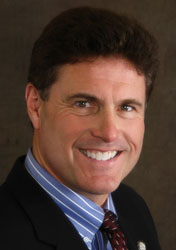
Dunnigan
Defining ‘Typical’: A Critical Step In Determining The Health Law’s Essential Benefits Package
Utah State Rep. James Dunnigan writes that聽the “secretary of Health and Human Services must define ‘essential benefits’ in a way that includes 10 broad categories of services and is equal in scope to benefits provided under a typical employer plan. The problem is that what’s ‘typical’ varies both within and across states, and even varies by employer and plan type. …聽As a result, if the secretary establishes an inflexible, nationally uniform definition of essential benefits, states and consumers could lose in several ways.” Read the column.听聽
黑料吃瓜网 News is a national newsroom that produces in-depth journalism about health issues and is one of the core operating programs at KFF鈥攁n independent source of health policy research, polling, and journalism. Learn more about .This <a target="_blank" href="/news/different-takes-3/">article</a> first appeared on <a target="_blank" href="">KFF Health News</a> and is republished here under a <a target="_blank" href=" Commons Attribution-NonCommercial-NoDerivatives 4.0 International License</a>.<img src="/wp-content/uploads/sites/8/2023/04/kffhealthnews-icon.png?w=150" style="width:1em;height:1em;margin-left:10px;">
<img id="republication-tracker-tool-source" src="/?republication-pixel=true&post=29220&ga4=G-J74WWTKFM0" style="width:1px;height:1px;">]]>