Chris and Alicia Johnson have 10 kids 鈥� three biological, five adopted out of foster care and two foster children 鈥� all under one roof on the outskirts of Orlando, Fla.
While providing love, support and encouragement for their foster kids, they鈥檝e sometimes run into roadblocks trying to get them health care, including needed mental health services, because few providers take Medicaid insurance. 聽Another problem? Not being able to take foster children in different health care plans to the same doctors.
Those difficulties are not unusual for the nation鈥檚 nearly , whose health care can be complicated by cycling from one placement to another, undiagnosed childhood trauma and a failure to receive preventive care, according to experts.

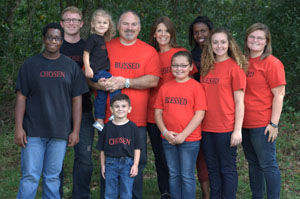
Pastor Chris Johnson and his wife Alicia first became foster parents in 2009 (Photo courtesy of the Johnson family).
They face an array of problems. According to the National Institute for Health Care Management, nearly 60 percent have at least one chronic disease, and nearly 70 percent have moderate to severe mental health disorders.
Florida is creating a special Medicaid plan to closely manage the care of this population, beginning in May.聽 The plan is designed to cover the estimated 31,600 Florida children in the welfare system, including those in foster care, placed with relatives or in group homes. In the Miami-Dade and Monroe region alone, there are 3,125 children eligible, according to the Florida Agency for Health Care Administration (AHCA).
In Florida, foster children are automatically enrolled in Medicaid, the joint-state federal health program. Sunshine Health, a subsidiary of Centene Corp., is responsible for Florida鈥檚 Child Welfare Specialty Plan. The five-year contract is valued at $1.1 billion, according to agency officials.
Sunshine Health said it is taking a holistic approach, covering physical and behavioral health, dental care and other services, with a network of more than 30,000 providers. Care managers help oversee children鈥檚 social needs, as well as their health.
鈥淚t鈥檚 all integrated,鈥� said Sunshine Health CEO Chris Paterson. 鈥淚f there鈥檚 a missing piece of health care, say a child is missing a vaccine, the community-based person is going to know that and help us get that child to the doctor.鈥�
Paterson also said the company believes it can鈥檛 provide quality health care without looking at the children鈥檚 social needs. The plan allocates about $150聽per child, to be spent at the care manager鈥檚 discretion, for items such as a baseball glove for a kid who wants to try out for a team or a new dress for a girl who wants to go to a school dance.
The idea is to close some of the gaps in care that often occur with children in foster care. When children have been moved around, 鈥渋t鈥檚 hard to put the pieces of the puzzle together,鈥� says Dr. Moira Szilagyi, chairwoman of the National Council on Foster Care, Adoption and Kinship Care for the American Academy of Pediatrics.
鈥淚f a provider has not stepped back and looked at the larger history of abuse, multiple families, needs being neglected, they may put children on medication that may or may not benefit the child,鈥� Szilagyi said. 鈥淭hey may not see it鈥檚 the impact of childhood trauma.鈥�
鈥�(Foster children) can be a fluid population in terms of providing adequate services to them,鈥� said David A. Rogers, assistant deputy secretary for Medicaid. 鈥淭here鈥檚 a uniqueness there that makes them a good target population鈥� for managed care.
Szilagyi said she鈥檚 had patients who come in with five or six different diagnoses. Once doctors understand the children鈥檚 backgrounds better, they鈥檙e often able to get them the right mental health services.
She emphasized the importance of preventive care.聽 鈥淚f you鈥檙e not getting preventive care, then you鈥檙e not getting your other needs met.鈥�
Sara Rosenbaum, a health law and policy professor at George Washington University, said many states are interested in doing more managed care programs for at-risk populations.
鈥淚n some ways, insurers who specialize or have an expertise in care of high-needs populations may have less risk (caring for them)鈥t鈥檚 not to say there aren鈥檛 any risks, but with the general population, you don鈥檛 know whether there鈥檚 going to be unanticipated risks.鈥� Specialists are more likely to know what to expect, she said.
Florida is not alone in taking this approach. Tennessee and Texas have already moved foster children into managed care, and Georgia plans to do so later this year.
Carolyn Ingram, senior vice president at the nonprofit Center for Health Care Strategies, and a former director of Medicaid in New Mexico, said states need to pay higher rates to insurers managing the care of high-needs populations, including foster kids, because they cost more, but those costs will pay off in better health.
鈥淚f you don鈥檛 do managed care for the high-needs population, then you鈥檙e not going to聽change the health of those people.鈥�
Chris Johnson, a senior pastor at Liberty Baptist Church, and his wife Alicia, said they decided to become foster parents in 2009 after praying on the need for more good homes. Their most recent foster kids will be eligible for Florida鈥檚 new managed care plan. And Johnson said he can use the help in getting them the care they need. 鈥淚t鈥檚 challenging,鈥� he said.