OAKLAND, Calif. 鈥� It鈥檚 been two months since Rodrigo Salido left the maximum security wing at Santa Rita jail, and two months without pills for his bipolar disorder.
The medication, Risperdal, prescribed by a jailhouse psychiatrist, had quelled Salido鈥檚 angry moods. 鈥淚t helped me be more relaxed,鈥� he said. 鈥淣ot as much on the edge and feeling like everybody is out to get me.鈥�


Rodrigo Salido had never applied for health insurance before (Image courtesy of PBS NewsHour).
Now Salido, who served two years for burglary, assault and gang involvement, has no health insurance and few options for refilling his medication.
Many inmates leave county jails and state prisons with mental health problems and chronic physical ailments, and no health coverage. Because they typically are not custodial parents, ex-offenders have long been ineligible for a public health insurance program aimed at kids, mothers and the disabled.
But earlier this year, California and 25 other states, under a provision of President Obama鈥檚 health law, opened up Medicaid to single and so-called 鈥渃hildless鈥� adults. The change in eligibility criteria will extend Medicaid coverage to vast numbers of ex-offenders whose incomes are below the federal poverty line.
鈥淗istorically, 10 or 11 percent of folks in detention have been eligible for Medicaid,鈥� said Alex Briscoe, health director for Alameda County. 鈥淭hat number is well over 90 percent as of January.鈥�
Indeed, of those newly eligible under the Medicaid expansion, experts predict nationally will be former inmates or detainees. Health officials in Alameda County estimate 18,000 offenders in its two jails will qualify.
Men and women involved in the criminal justice system are more likely to be sicker than the general population, with higher rates of diabetes, hypertension, depression, mood disorders and alcohol and drug addiction. Many have spent years鈥攑erhaps their entire adult lives鈥攚ithout health insurance and have medical conditions that must be stabilized when they鈥檙e incarcerated.
鈥淭hey come to us in bad shape, and we get them as good as possible,鈥� said Richard Lucia, the undersheriff for Alameda County.

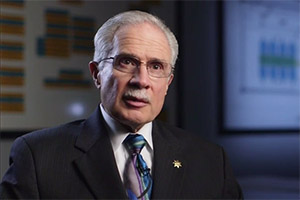
Alameda County Undersheriff Richard Lucia (Image courtesy of PBS NewsHour)
At Santa Rita jail in Dublin, one of the largest detention facilities in the United States, the pharmacy dispenses some 350,000 prescription drugs each month and spends $28 million each year on medical and mental health services. But because recidivism rates are so high in Alameda County鈥攖wo out of three inmates re-offend鈥攖he jails鈥� medical clinics often end up re-stabilizing the same inmates.
鈥淭hey leave and they get in bad shape again,鈥� said Lucia. 鈥淎nd they come back to us, and we fix them up again.鈥�
The churning of sick offenders costs the county when inmates are in custody 鈥� but it also strains public hospital budgets when they鈥檙e released. 鈥淲hen they do need care they come to our emergency department. They cost us between $600 and $800 a visit,鈥� said Briscoe, the county health director. 鈥淭he cost drivers on our system are intense.鈥�
The Medicaid expansion, county officials contend, offers a rare opportunity to connect men and women with criminal records to ongoing medical and mental health services, and to directly reimburse the county鈥檚 general fund for medical care outside of correctional facilities.
While it remains against federal law to use Medicaid to pay for day-to-day medical care for inmates, the program, funded by federal and state dollars, will cover hospital stays longer than 24 hours. Those longer hospital visits often involve costly and complicated surgeries, and the county estimates it could save $3 to $5 million a year in off-site hospital care.
鈥淭hat would shift the cost, essentially, from the county to the state or to the federal government,鈥� said Undersheriff Lucia.
Over the last few months, a constellation of Alameda County agencies, including the sheriff鈥檚 office, public health and social services, have been feverishly working to create new protocols that will automatically enroll all eligible inmates into Medi-Cal, as Medicaid is known in California. Other enrollment efforts are underway in Contra Costa, San Francisco, Solano and Lassen counties, and in Cook County, Illinois, the state of Washington and elsewhere.

Alex Briscoe is health director for Alameda County (Image courtesy of PBS NewsHour).
The bureaucratic and technical challenges are immense: archaic information technology platforms must be re-tooled to share data with other county systems; arrested individuals often give false information about their marriage status, number of children, home address and income,聽 foiling Medicaid eligibility background checks; and labor union rules permit only certain county workers to approve Medicaid applications.
Overcoming those obstacles is a priority, county officials said, not only because of the potential cost savings, but also because the Medicaid expansion offers a solid chance at reducing the county鈥檚 dismal recidivism rate. Several studies have shown that ex-inmates who have access to health care when they leave jail, especially mental health and substance abuse counseling, are less likely to re-offend.
Still, a Medicaid card is no panacea for troubled lives. 鈥淵ou can鈥檛 treat away the problems that face poor communities,鈥� said Briscoe, the county health director. 鈥淚t鈥檚 about a good job. It鈥檚 about a sense of belonging. It鈥檚 about a place to sleep, but healthcare can be a tool for social justice if it鈥檚 delivered effectively and creatively, and that鈥檚 why the Medicaid expansion is such a great opportunity for us.鈥�