Young adults may be key to the success of Obamacare. Insurance companies need a mix of ages, and a mix of healthy and sick people to balance out the costs for everyone — and young people tend to be healthier. But persuading them to sign up for health insurance is no easy task. Many don’t know about the law, don’t think they need coverage, or are confused about how to sign up.
At lunchtime on the North Harris campus of Community College, students stream through the lobby of the student services center, plugged into their headphones or rushing to class. Many walk right past a small information table about the Affordable Care Act.

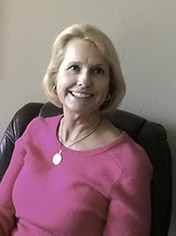
Megan Franks, a health and fitness professor, is trying to educate students about health insurance at Lone Star Community College in Houston (Photo courtesy of Megan Franks)
The table is the brainchild of , a health and fitness professor. Franks says getting overworked students to stop and learn about the law is tough.
“If you say ‘Obamacare,’ they know what you’re saying. If you say ‘Affordable Care Act,’ they walk by without any ‘ding, ding, ding’ (of recognition),” she says. “So then we throw out the word ‘penalty’: Zoom! They’ve before. Penalty? That really tends to be a hook more than ‘Gee you really need health care.’”
Franks says many students at Lone Star are low-income. They often work. Some have families to support. Others struggle to find gas money to even get to class.
“I still think so many of them are at survival mode. ‘Health insurance? Really? You know, I’ve got to get to work,’” she says.
She could be talking about Adan Castillo. He’s 19 and hoping for a career in law enforcement, or maybe the Marines. In addition to his classes, he also works. Castillo actually used to be insured. He paid his parents $55 a month to stay on their health plan. But he says it just felt like throwing money away.
“I just stopped giving it to them,” he says. “There are other important things I have to do, like paying for my college books, classes, gas. Gas is expensive nowadays.”
But Castillio’s girlfriend, Leslie Gonzalez, an accounting student, says insurance is important: “He needs it. Because what if — let’s say he doesn’t have it right now and he gets in an accident. He’s going to have to pay everything out of pocket and what if he doesn’t have it?”
Gonzalez works part time as a bank teller. She says she will sign up for insurance at work as soon as she is eligible.
The stereotype about young people is that they think they’re “invincible,” that they don’t need insurance because they’re young and nothing bad will happen to them for years. But most young adults don’t actually think that way.
Two recent surveys, and , reveal that cost is the real issue. (Kaiser Health News is an editorially independent program of the Kaiser Family Foundation.)
Young people often , and they assume they can’t afford it. And they simply don’t know about the subsidized plans offered under the law, or how to get them.
Taylor Castille is a nursing student in her second year at Lone Star. She has logged on to , but her first visit didn’t go very well.
“I finally got on the website the other day and it was kind of confusing to me because I didn’t understand if I would have to pay, what would I pay, what I’m not paying,” she explains. “I got stressed out all over again just looking at that. So I just left the site and didn’t even bother to go back.”
Castille still wants coverage. Last fall she suffered a series of fainting spells and seizures. After a few visits to the ER, she now has $30,000 in medical debt. And she still doesn’t have a diagnosis.
“I have all this debt and I’m 21. I haven’t bought a car, I haven’t done anything,” Castille says. “I don’t have the debt because I was being irresponsible, I have the debt because I was sick and I couldn’t control that, so now I’m stuck with that.”
Castille later visited the information table and got a flier on how to sign up for a health plan.
So far, only about 25 percent of adults who have signed up are younger than 34. The federal government is that proportion closer to 40 percent.
The deadline to enroll — for all ages — is March 31.
This story is part of a reporting partnership that includes , and Kaiser Health News.