

Women, in particular, have a lot at stake in the fight over the future of health care.
Not only do many depend on insurance coverage for maternity care and contraception, they are struck more often by such diseases as autoimmune conditions, osteoporosis, breast cancer and . They are more likely to be poor and depend on Medicaid — and to live longer and depend on Medicare. And it commonly and coverage for the whole family.
Yet in recent months, as leaders in Washington discussed the future of American health care, women were not always allowed in the room. To hammer out (behind closed doors) the Senate’s initial version of a bill to replace Obamacare, Majority Leader Mitch McConnell , all male. Some Congress members made clear they don’t see issues like childbirth as a male concern. Why, two GOP representatives during the House debate this spring, should men pay for maternity or prenatal coverage?
It is telling, perhaps, that two of the three GOP senators to kill the Republican’s repeal bill were women. Though Arizona Sen. John McCain’s vote was by the bill’s opponents, Sens. Lisa Murkowski of Alaska and Susan Collins of Maine all along, including to plans to suspend Planned Parenthood funding. And for their opposition they were pilloried — even — by members of their own party.
Republican repeal efforts are stalled, for now, but the fate of America’s health care system remains highly uncertain.
Many of the programs women depend on are still targets, most especially Medicaid, which pays for . Some programs are already shrinking under the Republican-controlled government — , for example. In addition, states have been empowered to cut Title X
Discussion over health reform shows some signs of becoming more open and bipartisan, perhaps bringing more women’s perspectives to the debate.
But women are hardly speaking in unison when it comes to overhauling health care. “Women’s health” means very different things to different people, based on their backgrounds and ages. A 20-year-old may care more about how to get free contraception, while a 30-year-old may be more concerned about maternity coverage. Women in their 50s might be worried about access to mammograms, and those in their 60s may fear not being able to afford insurance before Medicare kicks in at 65.
Many older women vividly recall when abortion in the U.S. was performed dangerously and illicitly; some fought hard for the right to choose termination that was affirmed in the 1973 Roe v. Wade Supreme Court decision. Still, nearly 45 years later, the nation remains at war over abortion, and women are on both sides of that battle. say it should be illegal in most or all cases.
To get a richer sense of women’s viewpoints on health care as the national debate continues, we asked several around the country and across generations to share their thoughts and personal experiences.
Patricia Loftman, 68
New York City
Loftman spent 30 years as a certified nurse-midwife at Harlem Hospital Center and remembers treating women coming in after having botched abortions.
Some didn’t survive.
“It was a really bad time,” Loftman said. “Women should not have to die just because they don’t want to have a child.”

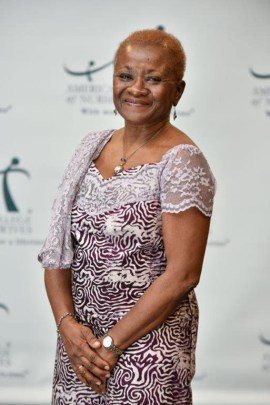
Now retired, Patricia Loftman, 68, is a board member for the American College of Nurse-Midwives and advocates for better care for minority women. (Courtesy of Patricia Loftman)
When the Supreme Court ruled that women had a constitutional right to an abortion, Loftman remembers feeling relieved. Now she’s angry and scared about the prospect of stricter controls. “Those of us who lived through it just cannot imagine going back,” she said.
A mother and grandmother, Loftman also recalls clearly when the birth control pill became legal in the 1960s. She was in nursing school in upstate New York and glad to have another, more convenient option for contraception. Already, women were gaining more independence, and the Pill “just added to that sense of increased freedom and choice.”
To her, conservatives’ attack on Planned Parenthood, which already has closed many clinics in several states, is frustrating because the organization also provides primary and reproductive health care to many poor women who wouldn’t be able to get it otherwise.
Now retired, Loftman sits on the board of the American College of Nurse-Midwives and advocates for better care for minority women. “There continues to be a dramatic racial and ethnic disparity in the outcome of pregnancy and health for African-American women and women of color,” she said.
Terrisa Bukovinac, 36
San Francisco
Bukovinac calls herself a passionate pro-lifer. As president of Pro-Life Future of San Francisco, she participates in marches and protests to demonstrate her opposition to abortion.
“Our preliminary goal is defunding Planned Parenthood,” she said. “That is crucial to our mission.”

Terrisa Bukovinac, 36, serves as president of Pro-Life Future of San Francisco and participates in anti-abortion demonstrations. (Courtesy of Terrisa Bukovinac)
As much as the organization touts itself as being a place where people get primary care and contraception, “abortion is their primary business model,” Bukovinac said.
She said the vast majority of abortions are not justifiable and that she supports a woman’s right to an abortion only in cases that threaten the patient’s life. “We are opposed to what we consider elective abortions,” she said.
Bukovinac said she also tries to help women in crisis get financial assistance so they don’t end their pregnancies just because they can’t afford to have a baby. “We have to help women obtain the resources necessary to sustain their pre-born children’s lives,” she said.
She supports women’s access to health insurance and health care, both of which are costly for many. “Certainly the more people who are covered, the better it is” for both the mother and baby.
Bukovinac, however, is uninsured because she said the premiums cost more than she would typically pay for care. Self-employed in e-commerce, Bukovinac has a disorder that causes vertigo and ringing in the ear and spends about $300 per month on medication for that and for anxiety.
She doesn’t know if the Affordable Care Act is to blame, but she said that before the law “I was able to afford health insurance and now I’m not.”
Irma Castaneda, 49
Huntington Beach, Calif.
Castaneda is a breast cancer survivor. She’s been in remission for several years but still sees her oncologist annually and undergoes mammograms, ultrasounds and blood tests.

Irma Castaneda, 49, says the bright side of becoming eligible for Medicaid was her family now faces fewer out-of-pocket expenses for health care. (Courtesy of Irma Castaneda)
The married mom of three, a teacher’s aide to special-education students, is worried that Republicans may make insurance more expensive for people like her, with preexisting conditions. “They could make our premiums go sky-high,” she said. “I didn’t ask to get cancer.”
Her family previously purchased a plan on Covered California, the state’s Obamacare exchange. But Castaneda said the plan had a high deductible, so she had to come up with a lot out-of-pocket before insurance kicked in. “I was paying medical bills up the yin-yang,” she said. “I felt like I was paying so much for this crappy plan.”
Then, about a year ago, Castaneda’s husband got injured at work and the family’s income dropped in half. Now they are relying on Medicaid, the government program for low-income people, until he starts working again. Becoming eligible for Medicaid was a “blessing in disguise,” she said, because it meant fewer out-of-pocket expenses for health care.
Whatever the coverage, Castaneda said, she needs high-quality health care. “God forbid I get sick again,” she said. It’s essential for her teenage daughter, too, she said. Her daughter is transgender and receives specialized physical and mental health care.
“Right now she is pretty lucky because there is coverage for her,” Castaneda said. “With the Trump stuff, what’s going to happen then?”
Celene Wong, 39
Boston
The choice was agonizing for Wong. A few months into her pregnancy, she and her husband learned that her fetus had chromosomal abnormalities. The baby would have had severe special needs, she said.
“We always said we couldn’t handle that,” Wong said. “We had to make a tough decision, and it is not a decision that most people ever have to face.”
The couple terminated the pregnancy in January 2016, when she was about 18 weeks pregnant. “At the end of the day, everybody is going to go away except for your husband and you and this little baby,” she said. “We did our research. We knew what we would’ve been getting into.”
Wong, who works to improve the experience for patients at a local hospital, said she is fortunate to have been able to make the choice that was right for her family. “If the [abortion] law changes, what is going to happen with that next generation?” she said.
Most of Wong’s care was covered by insurance from her job but she worries about those who rely on Planned Parenthood for reproductive health care. She said the organization should change its name to “Women’s Health.”
“If you are saying you want to end funding for women’s health, people are going to be more up in arms about it,” she said.
Lorin Ditzler, 33
Des Moines, Iowa
Ditzler is frustrated that her insurance coverage may be a deciding factor in her family planning. She quit her job last year to take care of her 2-year-old son and was able to get on her husband’s plan, which doesn’t cover maternity care.
If she gets pregnant accidentally, she says, they would be in a real bind. “To me it seems very obvious that our system isn’t set up in a way to support giving birth and raising very small children.”
While maternity benefits are required under the Affordable Care Act, her husband’s plan is grandfathered under the old rules, not uncommon among employers that offer coverage. Skirting maternity coverage might become more common if Republicans in Congress succeed in passing a replacement proposal that allows states to no longer consider maternity coverage an “essential benefit.”

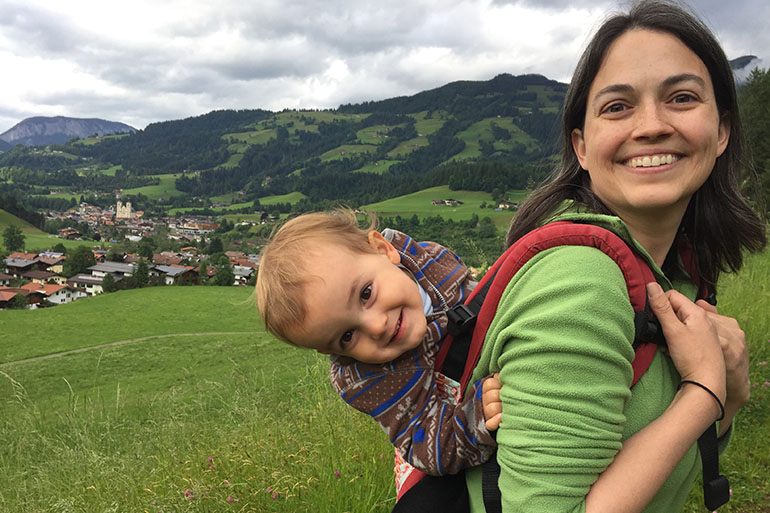
Lorin Ditzler, 33, says concerns about insurance coverage could play a role as she and her husband decide whether to have a second child. (Courtesy of Lorin Ditzler)
Ditzler looked into switching to an Obamacare plan that they could buy through the exchange, but the rates were much higher, and she has only a short window to sign up each year on the exchange.
“It’s already this big decision where we don’t know if we’re going to have another kid or when,” says Ditzler. “When Jan. 1 came around, we had to decide if we were going to try to get pregnant this year. And if we changed our mind, well too bad.”
If she went back to work, she could get on a better insurance plan that covers maternity care. But that makes little sense to her. “I would go back to a full-time job so I could have a second child, but if I do that, it will be less appealing and less feasible to have a second child because I’d be working full time.”
Ashley Bennett, 34
Spartanburg, S.C.
Bennett, who is devoutly Christian, is grateful that she was able to plan her family the way she wanted, with the help of birth control. She had her daughter at 22 and her son two years later.
“I felt free to make that choice, which I think is an awesome thing,” she said. She’s advised her 12-year-old daughter to wait for sex until marriage but has also been open with her about birth control within the context of marriage.
But she draws the line at abortion. “I just feel like we’re playing God. If that conception happens, then I feel like it was meant to be.”
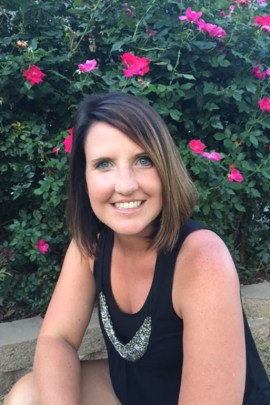
Ashley Bennet, 34, says she voted for Trump in the 2016 election because he was the anti-abortion candidate. (Courtesy of Ashley Bennett)
Bennett had apprehensions about Trump but voted for him because he was the anti-abortion candidate. “That was the deciding factor for me, [more than] him yelling about how he’s going to build a wall.”
She added that opposition to abortion must be coupled with support for babies once they are born — something she says not all Christians emphasize enough. She supports adoption and is planning to become a foster parent.
She also is concerned about the mental and physical well-being of young women. Bennett teaches seventh-grade math and coaches the school’s cheerleading and dance teams.
She watches the girls take dozens of photos of themselves to get the perfect shot, then add filters to add makeup or slim them down.
“There’s going to be an aftermath that we haven’t even thought about,” she said. “I worry we’re going to have more and more kids suffering from depression, eating disorders and even suicide because of the effects of the social media.”
Maya Guillén, 24
El Paso, Texas
When Guillén was growing up, her family spent years without health insurance. They crossed the border into Juárez, Mexico, for dental care, doctor appointments and optometry visits. “I remember feeling safe, because it was so cheap.”
Guillén is now on her parents’ insurance plan, under a provision of the Affordable Care Act that allows children to stay on until they turn 26. She’s been disheartened by Republicans’ proposed changes to contraception and abortion coverage, she said.
In high school, Guillén received abstinence-only sex education. She watched her friends get pregnant before they had graduated.


Maya Guillén says she worries Republicans efforts to defund Planned Parenthood could prevent young girls, especially those in predominantly Hispanic communities like hers, from getting access to contraceptives. (Courtesy of Maya Guillén)
When it came time to consider sex, she thought she’d be able to count on Planned Parenthood, but the clinic in El Paso has closed, as have 20 other women’s health clinics in Texas. She worries that if Republicans defund Planned Parenthood, more young girls, especially those in predominantly Hispanic communities like hers, will not get access to, or education about, contraceptives.
Guillén is also dismayed by the way Trump talks about women, particularly in the “Access Hollywood” tapes that emerged in October.
“I feel like men could now do anything to me and dispose of my body because the president had made those comments, because he condones it.”
“I feel like a lot of young people try to voice their opinions, but we’re not being taken into consideration. We’re so much more open-minded, but our president and all the people in power are trying to send us back.”
Jaimie Kelton, 39
New York City
When Kelton’s wife gave birth to their baby 3½ years ago, she thought the country was finally becoming more open-minded toward gays and lesbians.
Kelton said she was lucky to live in New York City, where she said it doesn’t matter that her children have two moms. She thought that was how the majority of the country felt, especially after the Supreme Court legalized gay marriage in 2015.

Jaimie Kelton (left), 39, poses with her daughter and wife. (Courtesy of Suzanne Fiore Photography)
“Now I am coming to realize that we are the bubble and they are the majority and that’s really scary,” said Kelton, now pregnant with her second child.
Kelton said it seems as though Republicans have launched a war against women in general, with reproductive rights and maternity care at risk.
“It is crazy to think that most of the people making these laws are men,” she said. “Why do they feel the need to take away health care rights from women?”
Phyllis Sandel, 89
Bothell, Wash.
Sandel, who lives in a retirement community outside Seattle, meets regularly with other residents to talk about current events, including the push to repeal Obamacare. She’s concerned about the Republican proposals and their potential effects on women. “I think it’s going to be devastating,” she said.
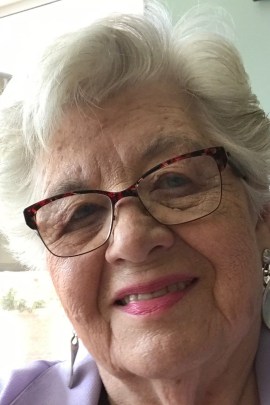
Former health care administrator and nursing home consultant Phyllis Sandel, 89, has been advocating for women’s rights for decades and volunteered for Planned Parenthood in the 1960s. (Courtesy of Phyllis Sandel)
Sandel has been advocating for women’s rights for decades, since she volunteered for Planned Parenthood in Denver in the 1960s. She signed up for phone banks in the ’70s, and walked door-to-door and got signatures for petitions — all in support of the women’s movement and the Equal Rights Amendment. “I was one of a few people in my coffee klatch group who became active,” she said.
A former health care administrator and nursing home consultant, Sandel said legislators are in the “wrong territory” in their push to defund Planned Parenthood and restrict access to abortion.
“Because we have such conservative control in our legislature, this is going to be a hard fight. But we have to stand up for it,” she said.
She attended a caucus for Hillary Clinton during the election and said she was among a few “grayhairs” in the room.
“I am encouraged by the number of young women who are active and participating in affecting change,” she said. “That wasn’t true when I was growing up.”
KHN’s coverage in California is funded in part by .