Every year like clockwork, Anna Peterson has a . Peterson, who will turn 80 next year, undergoes screening at three- or five-year intervals as recommended by her doctor, although she has never had cancerous polyps that would warrant such frequent testing. Her 83-year-old husband faithfully gets regular to check for prostate cancer.
“I just think it’s a good idea,” says Peterson, who considers the frequent tests essential to maintaining the couple’s mostly good health. The Fairfax County resident brushes aside concerns about the downside of their screenings, which exceed what many experts recommend. “Most older people do what their doctors tell them. People our age tend to be fairly unquestioning.”
But increasingly, questions are being raised about the overtesting of older patients, part of a growing skepticism about the widespread practice of routine screening for cancer and other ailments of people in their 70s, 80s and even 90s. Critics say there is little evidence of benefit — and considerable risk — from common tests for colon, breast and prostate cancer, particularly for those with serious problems such as heart disease or dementia that are more likely to kill them.

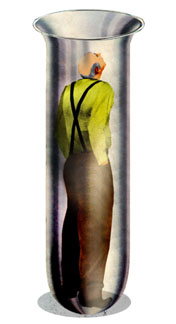
Illustration by Brian Stauffer
Too often these tests, some doctors and researchers say, trigger a cascade of expensive, anxiety-producing diagnostic procedures and invasive treatments for slow-growing diseases that may never cause problems, leaving patients worse off than if they had never been tested. In other cases, they say, treatment, rather than extending or improving life, actually reduces its quality in the final months.
“An ounce of prevention can be a ton of trouble,” observed geriatrician Robert Jayes, an associate professor of medicine at George Washington University School of Medicine. “Screening can label someone with a disease they were blissfully unaware of.”
Dartmouth physician Lisa M. Schwartz cites one such case: a healthy 78-year-old man who was left incontinent and impotent by radiation treatments for prostate cancer, a disease that typically grows so slowly that many men die with — but not of — it.
The , an independent panel of experts that evaluates the risks and benefits of screening tests, does not endorse PSA testing or routine colon screening after age 75. The panel, whose recommendations will guide some coverage decisions under the 2010 federal health law that expands access to screening, says there is no evidence for or against mammography after age 74 and recommends that most women stop getting Pap smears to detect cervical cancer after 65.
So far the task force’s guidelines appear to have had limited impact. Researchers in June reported in the journal that nearly half of primary-care doctors would advise a woman with terminal lung cancer to get a routine mammogram — even if she was 80 years old. A 2010 in the Journal of the American Medical Association of more than 87,000 Medicare patients found that a “sizeable proportion” with advanced cancers continued to be screened for other malignancies. Last May, Texas researchers reported in the that 46 percent of 24,000 Medicare recipients with a previous normal test underwent a repeat colonoscopy in less than seven years and sometimes as few as three — compared with the 10 years recommended by the task force. In nearly a quarter of cases, the repeat test was performed for no discernible reason. (Medicare is supposed to cover the screening test, which can cost about $2,000, only once a decade if no cancer or polyps have been found, but the program paid for all but 2 percent of the procedures reviewed by the Texas researchers.)
“More is not always better, and that becomes particularly true in older Americans where the dangers of medical care grow,”said Michael LeFevre, a professor of family medicine at the University of Missouri School of Medicine who is co-vice chair of the task force. “The older you get, the more likely it is that something else is going to make you sick or die.” Colon polyps take 10 to 20 years to become cancerous, while the risks from colonoscopy, including intestinal perforation and heart attack, substantially increase after age 80.
Experts point to several reasons for the persistence of overscreening: habit; incentives that pay doctors and hospitals for individual procedures; quality assessments that rely on how many patients receive such tests; physicians’ fears of missing something important or of upsetting elderly patients — or their children — by suggesting that screening is unnecessary because a patient is too old or too sick to benefit.
In an era where discussions about end-of-life care are branded as “death panels” and curtailing unnecessary and expensive testing is regarded by some as rationing, experts say it is not surprising that overtesting endures. Many doctors say it’s easier to simply order a test than to discuss its risks and benefits with patients.
But some doctors believe it’s time to resist. “I think we need to say we can’t do everything for everybody, and it doesn’t make sense,” said Washington radiologist Mark Klein, who recently performed a on a 99-year-old woman. Klein said he considered not doing the procedure but decided to go ahead because he didn’t learn how old the patient was until she was lying on the table, having undergone the prep.
“The most important thing on any referral is the date of birth,” said Klein, who said he tries to talk some older patients and their doctors out of pursuing tests and treatments he considers overly aggressive. “The game is not finding things, it’s can you improve mortality? And if you do find something, it’s very hard for a doctor to say, ‘Don’t do anything.’ ”
While cancer screenings are most common, other tests are overused among the elderly, Klein and others say. They include cholesterol testing, which can lead to the prescription of statin drugs that require regular blood tests to check liver function; typically, cholesterol plaque takes years to accumulate, and statins confer only a modest benefit in the elderly. Likewise, CT scans of the heart or whole body can unearth suspicious findings, such as lung nodules, which trigger a painful and risky lung biopsy, but often turn out to be benign.
First Mammogram — At 100
Schwartz, a professor at the Dartmouth Institute for Health Policy and Clinical Practice and an author of the 2011 book “Overdiagnosed,” said that overtesting may reflect in part the use of screening tests as a barometer of quality. “Unfortunately that’s how we’ve measured quality: Did they get tests? And doctors are being judged and paid accordingly. So all these crazy things get done that don’t help people.”
Patients feel the pressure, too, Schwartz maintains. Screening has become a mantra, she said, trumpeted by advocacy groups. “The message is that you’re a good person if you get screened.”
The American Cancer Society doesn’t support an upper age limit for colonoscopy or mammography, although the group does not endorse PSA testing. The society’s director of cancer screening, Robert C. Smith, said he thinks underscreening is a bigger problem than overtesting. “As long as a patient is in good health and a candidate for treatment, they are a candidate for screening indefinitely,” he said.
But Smith says there are limits. He recalls the loud cheer at a medical meeting after it was announced that a 100-year-old woman had just undergone her first mammogram. “Several of us were just shaking our heads in disbelief because it makes absolutely no sense whatsoever to put a 100-year-old woman through a mammogram,” he said.
Telling someone that screening is no longer necessary can be dicey, as California family physician Pamela Davis discovered when she advised her robust 86-year-old mother to stop getting mammograms and routine colon tests.
Her mother was incensed, Davis recounted in a recent , accusing her of wanting to “save money to spend on the young people and just let us old folks die.” Davis was even more taken aback by the wave of hate mail she received after the article was published, some of it from doctors, accusing her of essentially the same thing.
“I have many, many patients who are like my mother,” said Davis, who directs the family medicine residency program at Northridge Hospital Medical Center. “It’s not about shortchanging them” but about putting screening in context. “Part of keeping people healthy and elderly is keeping them away from the hospital. Sometimes I’ll say, ‘Well, if we do this heart test and then find something then you’ll need a procedure.’ And they’ll say, ‘Oh, I don’t want heart surgery.’ And I’ll say, ‘Why do the test?’”
Baltimore internist Mary Newman said she largely hews to the task force recommendations, and she jokes to patients that “after 85, everything’s optional.” She considers Medicare’s new annual wellness exam, part of the health law, a good time to raise the subject of screening. Newman said she focuses on concerns that geriatrics specialists say matter most in old age: maintaining hearing and vision, stabilizing blood pressure and addressing problems related to dementia and mobility.
In some cases doctors counsel against testing — but patients demand it. Alan Pocinki, an internist who practices in the District, said he tried to persuade an 80-year-old patient, a survivor of several heart attacks, to stop PSA testing. The man’s son, a Boston oncologist, agreed with Pocinki, but the patient insisted.
The elevated reading led to a biopsy, which found cancer. Pocinki said the patient contracted a serious infection from the biopsy, his cancer is being monitored through “watchful waiting,” and he has repeatedly said he wishes he’d never had the test. “He always tells me, ‘I know you told me not to do it.’ “
Screening The Dying
Why do doctors continue to screen terminally ill patients? Smith, of the American Cancer Society, thinks a primary reason is that they avoid difficult conversations that would involve telling patients they won’t live long enough to benefit.
“Just because it’s hard for doctors doesn’t mean it’s not a conversation worth having,” said Camelia Sima, a biostatistician at Memorial Sloan-Kettering Cancer Center in New York and lead author of the 2010 JAMA study. Doctors may regard additional tests as relatively inconsequential, but Sima notes that they can cause additional pain and suffering in the form of biopsies, surgery and chemotherapy.
To Dartmouth’s Schwartz, the message for older patients, regardless of the state of their health, is essentially the same: “It’s not always in your best interest to do more or to keep looking. But we never seem to talk about the downside of testing.”