A found that an overwhelming majority of doctors support palliative care, with 96 percent responding that they believe enhancing the quality of life for seriously ill patients is more important than extending life as long as possible. Despite these sentiments, many physicians responded that they have some hesitations about palliative care and that there are barriers to its full adoption.
Notably, the poll, released by National Journal and The Regence Foundation, also found a dramatic 鈥済eneration gap鈥� in physicians鈥� education and training on palliative care. Seventy-three percent of physicians age 39 or younger report 鈥渁 great deal鈥� or 鈥渟ome鈥� exposure to palliative care during medical school compared to 36 percent of those age 40-49, 23 percent of those age 50-59, and only 6 percent of those age 60 or older.

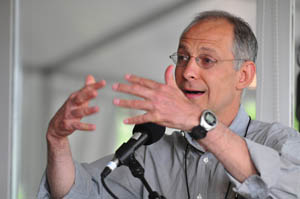
Ezekiel J. Emanuel (Photo by Tarek Rizk/Aspen Institute)
Speaking at a Tuesday, oncologist and bioethicist Ezekiel Emanuel, who currently teaches at the , called upon the medical community to push for even greater incorporation of palliative care into the health system.聽 Emanuel, the brother of Chicago Mayor Rahm Emanuel, said that his own career illustrates the major transformation in end-of-life care training. In 1984, during his third year of medical school, he decided to switch gears to pursue a PhD on end-of-life care issues, noting that his adviser told him, 鈥淭hat鈥檚 a career ender. Nobody wants to talk about end-of-life care.鈥� Despite such initial discouragement, he went on to incorporate palliative care in oncology treatment at the Dana-Farber Cancer Institute and later served as the of the Department of Bioethics at the NIH Clinical Center until last August and as a special health policy adviser at the White House, where he raised attention about ethical issues in end-of-life care.
Emanuel emphasized that the greatest challenge may be simply preparing physicians to talk about end-of-life care with their patients, noting that it can be an intensely emotional and difficult conversation. Meanwhile, the poll found that 91 percent of physicians believe patients are not adequately informed about palliative care; other physician concerns include that patients are reluctant to accept it because it means they might not recover, health insurance companies and Medicare don鈥檛 reimburse adequately for consultations, there aren鈥檛 enough palliative care physicians and services and patients can鈥檛 afford the care.
The poll found that 79 percent of physicians think the health care system spends too much trying to extend life while 21 percent believes the system should do whatever it takes. Many physicians also reported that they received little training on operational and financial aspects of palliative care and that they would like more on those topics.
, the New American Foundation鈥檚 acting health policy director, expressed concerns that the current reimbursement system inhibits the full use of palliative care, which would lead to the reduction of expensive treatment. 鈥淭his is the horrible dilemma that hospitals find themselves in,鈥� Brownlee said. 鈥淲hen you reduce that volume, you鈥檙e punished.鈥�
Emanuel said that at some point insurers and Medicare will have to 鈥渕ake a leap together鈥� to better support paying for palliative care. Emanuel, recalling Republican charges that the 2010 health law would establish noted that such political tactics 鈥渃ompletely backfired.鈥� Instead, he said they reinvigorated physicians鈥� efforts to improve end-of-life care.
鈥淢y inbox was flooded with support from physicians and it renewed the recognition by physicians that we have to do something on this,鈥� Emanuel said.
The poll, conducted by FTI Consulting, surveyed 500 board-certified physicians, 45 percent of whom were primary care providers and 55 percent specialists between Oct. 28-Nov. 2.聽 The poll has a margin of error of plus or minus 4 points.
Updated at 10:30 a.m. on Nov. 16 to correctly identify the poll sponsors.