CENTENNIAL, COLO. 鈥� When they get a call for medical help, most fire departments scramble both an ambulance and a fully-staffed fire truck.聽 But that鈥檚 way more than many people really need, says Rick Lewis, chief of emergency medical services at South Metro Fire Rescue Authority in the Denver suburbs.

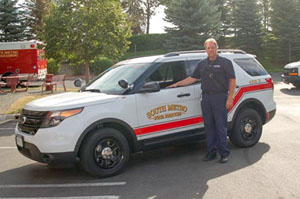
Eric Bleeker and a partner respond to 911 calls in this vehicle. The medical team on board can run some simple lab tests and prescribe some drugs, which may spare a patient a trip to the ER (Photo by Eric Whitney for KHN).
鈥淚t鈥檚 not the prairie and the old West anymore, where you have to be missing a limb to go to the hospital. Now it鈥檚 a sore throat, or one day of cold or flu season sometimes, and that can be frustrating for people, I know it is.鈥�
It鈥檚 frustrating for both ambulance crews and patients. Somebody who鈥檚 been running a fever for a couple of days needs help, but not necessarily an ambulance ride to the ER.
Ambulance crews aren鈥檛 required to transport everyone who calls, but Lewis says crews fear lawsuits if they were to leave and a patient got worse. Also, ambulance companies typically don鈥檛 get paid unless they take somebody to the hospital.聽 So Lewis teamed up with Mark Prather, an emergency room doctor, to come up with a better way.
鈥淲e created a mobile care unit that can go to a given patient, if we think they鈥檙e safe to treat on scene, and provide definitive on-scene treatment,鈥� says Prather.
The 鈥渕obile care unit鈥� is, basically, a station wagon. Advance practice paramedic Eric Bleeker shows off some of the gear. 鈥淭his one is a suture set, so it has everything for wound closure, from staples to regular sutures,鈥� he says.
Ambulances don鈥檛 have that. So, even someone with a small cut that just needs a quick couple of stitches? They get a ride to the emergency department.
Call And Response
While several cities across the country have started using paramedics as physician extenders, sending ambulance crews to do routine things like hospital follow-up visits in places where basic health care is hard to get, South Metro鈥檚 model focuses on responding to calls. The team always includes at least one nurse practitioner, so they can carry and prescribe basic medicines.
鈥淎 lot of what we do is sort of that mid-level between the acute care you receive in an emergency department and what the paramedics can currently do,鈥� says Bleeker. It鈥檚 kind of like an urgent-care clinic on wheels.
There鈥檚 also a miniature medical lab.
鈥淲e can run full blood chemistry, we can do complete blood counts, we can check for strep throat, we can check for influenza,鈥� he says. Those are capabilities that even many doctors鈥� offices don鈥檛 have on site.
That person who called 911 because they were running a fever could end up being diagnosed and treated in their living room by South Metro鈥檚 station wagon for about $500, says South Metro Chief Lewis. He estimates similar care in an emergency room could cost six or seven times that.
Record Check
South Metro Fire鈥檚 new service also relies heavily on Colorado鈥檚 new electronic medical records network.聽 The nurse or EMT can call up patient records on the scene to provide care that鈥檚 more like an office visit, and dispatchers can check recent medical histories to make sure they send ambulances to people who might really need one.
Mark Prather, the doctor who helped come up with this new treatment model, would like to see it spread. But so far, insurance companies don鈥檛 pay for it.
鈥淵eah, and that鈥檚 maybe why nobody has done it yet,鈥� he says, laughing.
For the last nine months South Metro has been running the sub-ambulance service without getting paid for it, to prove that it works.聽 But Prather thinks that鈥檚 about to change because of the Affordable Care Act. The law aims to get insurance companies and government programs like Medicare and Medicaid to stop paying for too much medical care. And health care providers who contribute to overuse of emergency rooms could be penalized.
鈥淚t allowed us to think about payment differently, and basically switch from a volume situation to a quality situation,鈥� he says.
But it鈥檚 not like the law just flips a switch and starts paying for appropriate care instead of rewarding providers who see a high number of patients and do lots of procedures. The change to reward efficient, appropriate health care is just starting to happen. Slowly. But Prather is now in talks with several big health care payers and hopes to be making money soon.聽