Consumers shopping for coverage on the new health insurance exchanges have been focused on the lowest-cost options. But some shoppers are trying to determine which plans offer the widest array of doctors and hospitals 鈥� and are finding that can be trickier than it sounds.
John Batteiger applied for insurance coverage on the New York State exchange. But after he鈥檇 selected a plan, he had second thoughts: He鈥檇 forgotten to check if the plan he picked included a hospital near him.
Batteiger is 54 and healthy. But all things being equal, he figures, why not make sure his neighborhood hospitals are considered 鈥渋n-network鈥� with his insurance plans?

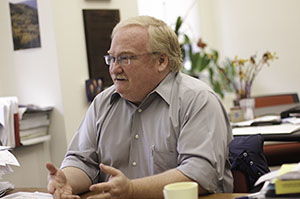
With some help from a navigator, John Batteiger was able to find an insurance plan that included coverage for a nearby hospital (Photo by Fred Mogul/WNYC).
Turned out that wasn鈥檛 so easy to figure out on his own. So he and , a ,鈥� are in a Manhattan office doing some digging.
After a little hunting and pecking, Batteiger learns that a nearby hospital, Lenox Hill, was not in the first plan he chose. Eventually he did find a plan that includes Lenox 鈥� and also brings his monthly premium down from about $290 to $230 per month.
鈥淭o save $60 a month 鈥� that鈥檚 a really great thing,鈥� Batteiger says.
It鈥檚 safe to say, however, that not everyone will be so lucky. New York City has a lot of hospitals to choose from, but many of them are considered in-network for only a few insurance plans. , vice president of public policy and communications at the National Committee for Quality Assurance, says health plans get better deals by limiting the number of in-network hospitals.
鈥淚f a health plan can say, 鈥業nstead of five hospitals in this city, we鈥檙e gonna have three,鈥� than those three hospitals in the network can give some discounts to the health plan,鈥� she explains.
Insurers and hospitals are often locked in a tug-of-war over prices. Smaller clinics and doctors鈥� offices have a lot less leverage than hospitals 鈥� but they also need to make decisions about which insurance networks to join. And many are sitting on the sidelines.
, president of Family Health Institute, serves low-income residents in the Bronx, many of whom have complex health needs. He says some of the plans are offering 鈥渆xtremely low鈥� medical reimbursement rates.
鈥淭hey claim they are putting their premiums out on the street at a very low rate to make them affordable,鈥� he says. 鈥淏ut we can鈥檛 afford to see these patients for the same amount of money that a private doctor in his office with one assistant can.鈥�
Calman accepts five plans. A handful of others wanted to pay him less than what he receives from Medicaid.
A trade association of New York doctors and found that three-fourths of them are either not participating in exchange plans or are unsure if they are.
Elisabeth Benjamin, the health exchange navigator, is also a senior policy adviser at the Community Service Society, which aids lower-income families. She says New York has done a good job generally making sure the all policies have enough in-network providers 鈥� but things are still in flux.
鈥淚t is a game of musical chairs. The providers and the health insurance companies 鈥� the music鈥檚 still playing,鈥� she says. 鈥淏ut eventually the music will stop, and then we鈥檒l have a strong sense of who the actual provider list is.鈥�
And that will continue happening over the next few years.
Benjamin printed out a comparison chart for her client, John Batteiger, of the plans he鈥檚 considering purchasing.
Batteiger, who鈥檚 been uninsured since June, says he鈥檚 not worried about finding a personal physician who accepts this or that plan, since he鈥檒l be starting from scratch, anyway.
But for other consumers who care about going to particular hospitals or doctors, Benjamin advises calling those offices before signing on to a plan.
This story is part of a reporting partnership that includes , and Kaiser Health News.