With only four weeks until Iowa Republicans gather for presidential caucuses, and with , both candidates and bloggers are intensifying their focus on the battle for the Republican nomination for president. 聽Despite to most or all of the tenets in the health law, the candidates are seeking political advantage by distancing themselves from each other on health policy.

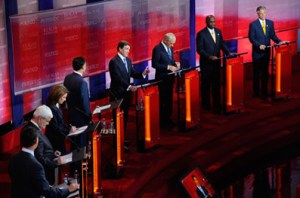
(Photo by Kevork Djansezian/Getty Images)
Here are what some blogs are saying about the GOP field鈥檚 positioning on health care:
At the Washington Post鈥檚 Right Turn blog, Jennifer Rubin writes on to purchase health insurance and how it鈥檚 affecting his standing among conservatives. 鈥淚f some conservatives think Romney is handicapped in taking the fight to President Obama on health care [since he signed a law instituting an individual mandate in Massachusetts] or can鈥檛 be counted on to repeal Obamacare, is Gingrich any better? The problem some conservatives are seeking to 鈥榮olve鈥� 鈥� find a more ideologically pristine nominee than Romney 鈥� should lead them to Rick Santorum or Rep. Michele Bachmann (R-Minn.), not Gingrich, who, in addition to NewtCare, has defied the right-wing base on illegal immigration鈥� (11/30).
Austin Frakt, at The Incidental Economist, seeks clarity about: 鈥淥n Medicare,聽[Gingrich鈥檚] website reads only, 鈥楥reate more choices in Medicare聽by giving seniors the option to choose, on a voluntary basis, a more personal system in the private sector with greater options for better care. This would create price competition to lower costs.鈥� That could mean so many things that it is close to meaningless鈥� (12/1).
Devon Herrick, writing on John Goodman鈥檚 Health Policy Blog at the National Center for Policy Analysis, that the health law would take money from older Americans and use it to pay for health care for younger people. 鈥淭he聽Post聽went on to explain why it thought the statement was inaccurate. 鈥� 鈥楾he Medicare savings in the health care law are aimed at providers, not seniors; meanwhile, seniors stand to benefit from aspects of the health-care law that Republicans want to repeal.鈥� The Medicare chief actuary would seem to agree with Bachmann. In his illustrative alternative , Richard Foster explained that under the impending cuts to the Medicare program, one in seven hospitals that treat Medicare patients would be insolvent; Medicare reimbursements would fall below Medicaid levels, causing seniors to increasingly have difficulty finding providers who will treat them鈥� (12/2).
In the meantime, John Goodman, at the same blog, to give veterans 鈥渢he opportunity to choose private health care alternatives to the Veterans Health Administration (V.H.A.), a system that too often fails them. Why can鈥檛 we do for veterans what we do for seniors? About one in every four Medicare beneficiaries is not actually in Medicare. They have enrolled instead in private health insurance plans operated by such entities as Aetna, United Health Care, Cigna, etc.鈥� (12/5).
At ThinkProgress Health, Igor Volsky defending insurers who discriminate against people with pre-existing conditions. 鈥淭he former Pennsylvania senator not only defended insurers for denying coverage to people with pre-existing conditions, he also argued that individuals who are sick should pay higher premiums because they cost more money to insure: 鈥� Santorum: 鈥榃ell, we should pay more. She鈥檚 going to be very expensive to the insurance company and, you know, that cost is passed along to us. 鈥� I鈥檓 okay with that鈥欌�� (12/2).
Volsky also writes that when he says that an executive order allows a president to repeal a congressionally approved law, like the health overhaul. 鈥淏ut a Government Accountability Office report out just last week found that while a president would be able to alter certain regulations, issuing waivers through executive authority would 鈥榣ikely conflict with an explicit congressional mandate聽and be viewed incompatible with the express 鈥� will of Congress. 鈥� 聽A President would not appear to be able to issue an executive order halting an agency from promulgating a rule that is statutorily required by PPACA,鈥� the report said鈥� (12/3).
Finally, James Pethokoukis, at the American Enterprise Institute鈥檚 Enterprise Blog, on health care reform: 鈥淗is approach to healthcare reform relied on markets rather than mandates. As the describes it, 鈥楿tah鈥檚 main health reform contained no individual mandate, no employer mandate, and has聽very limited regulatory authority. 鈥� It empowers individuals to take ownership of their own health聽insurance and to choose coverage that works for them鈥欌�� (12/4).