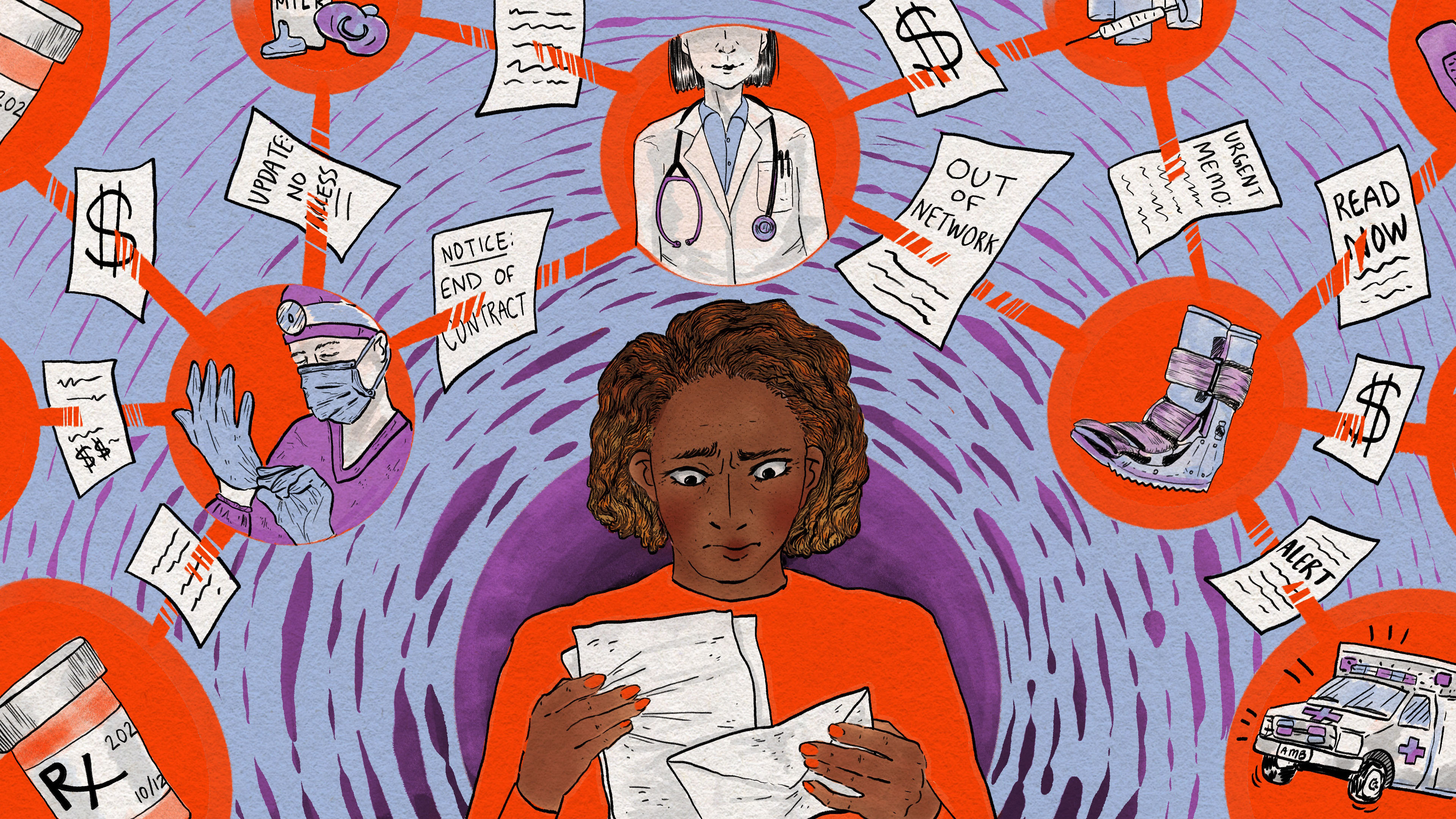
Last winter, Amber Wingler started getting a series of increasingly urgent messages from the local hospital in Columbia, Missouri, letting her know her family鈥檚 healthcare might soon be upended.
MU Health Care, where most of her family鈥檚 doctors work, was mired in a contract dispute with Wingler鈥檚 health insurer, Anthem. The existing contract was set to expire.
Then, on March 31, Wingler received an email alerting her that the next day Anthem was dropping the hospital from its network. It left her reeling.
鈥淚 know that they go through contract negotiations all the time 鈥� but it just seemed like bureaucracy that wasn't going to affect us. I'd never been pushed out-of-network like that before,鈥� she said. 听
The timing was awful.
The query: When a Missouri mom鈥檚 health insurance company couldn鈥檛 come to an agreement with her hospital, most of her doctors were suddenly out-of-network. She wondered how she would get her kids鈥� care covered or find new doctors. 鈥�For a family of five, 鈥� where do we even start?鈥�
鈥� Amber Wingler, 42, in Columbia, Missouri
Wingler鈥檚 8-year-old daughter, Cora, had been having unexplained troubles with her gut. Waitlists to see various pediatric specialists to get a diagnosis, from gastroenterology to occupational therapy, were long 鈥� ranging from weeks to more than a year.
(In a statement, MU Health Care spokesperson Eric Maze said the health system works to make sure children with the most urgent needs are seen as quickly as possible.)
Suddenly, the specialist visits for Cora were out-of-network. At a few hundred bucks a piece, the out-of-pocket cost would have added up fast. The only other in-network pediatric specialists Wingler found were in St. Louis and Kansas City, both more than 120 miles away.
So Wingler delayed her daughter鈥檚 appointments for months while she tried to figure out what to do.
Nationwide, contract disputes are common, with more than 650 hospitals having public spats with an insurer since 2021. They could as hospitals brace for about $1 trillion in cuts to federal healthcare spending prescribed by President Donald Trump鈥檚 signed into law in July.
Patients caught in a contract dispute have few good options. 鈥淭here's that old African proverb: that when two elephants fight, the grass gets trampled. And unfortunately, in these situations, oftentimes patients are grass,鈥� said Caitlin Donovan, a senior director at the Patient Advocate Foundation, a nonprofit that helps people who are having trouble accessing healthcare.
If you鈥檙e feeling trampled by a contract dispute between a hospital and your insurer, here is what you need to know to protect yourself financially:
1. 鈥淥ut-of-network鈥� means you鈥檒l likely pay more.
Insurance companies negotiate contracts with hospitals and other medical providers to set the rates they will pay for various services. When they reach an agreement, the hospital and most of the providers who work there become part of the insurance company鈥檚 network.
Most patients prefer to see providers who are 鈥渋n-network鈥� because their insurance picks up some, most, or even all of the bill, which could be hundreds or thousands of dollars. If you see an out-of-network provider, you could be on the hook for the whole tab.
If you decide to stick with your familiar doctors even though they鈥檙e out-of-network, consider asking about getting a cash discount and about the hospital鈥檚 financial assistance program.
2. Rifts between hospitals and insurers often get repaired.
When Brown University health policy researcher examined 3,714 nonfederal hospitals across the U.S., he said, he found that about 18% of them had a public dispute with an insurance company sometime from June 2021 to May 2025.
About half of those hospitals ultimately dropped out of the insurance company鈥檚 network, according to Buxbaum鈥檚 preliminary data. But most of those breakups ultimately get resolved within a month or two, he added. So your doctors very well could end up back in the network, even after a split.
3. You might qualify for an exception to keep costs lower.
Certain patients with might qualify for an extension of in-network coverage, called continuity of care. You can apply for that extension by contacting your insurer, but the process may prove lengthy. Some hospitals have set up resources to help patients apply for that extension.
Wingler ran that gantlet for her daughter, spending hours on the phone, filling out forms, and sending faxes. But she said she didn鈥檛 have the time or energy to do that for everyone in her family.
鈥淢y son was going through physical therapy,鈥� she said. 鈥淏ut I'm sorry, dude, like, just do your exercises that you already have. I'm not fighting to get you coverage too, when I'm already fighting for your sister.鈥�
Also worth noting, if you鈥檙e dealing with a medical emergency: For most emergency services, hospitals than their in-network rates.
4. Switching your insurance carrier may need to wait.
You might be thinking of switching to an insurer that covers your preferred doctors. But be aware: Many people who choose their insurance plans during an annual open enrollment period are locked into their plan for a year. Insurance contracts with hospitals are not necessarily on the same timeline as your 鈥減lan year.鈥�
, such as getting married, having a baby, or losing a job, can qualify you to change insurance outside of your annual open enrollment period, but your doctors鈥� dropping out of an insurance network is not a qualifying life event.
5. Doctor-shopping can be time-consuming.
If the split between your insurance company and hospital looks permanent, you might consider finding a new slate of doctors and other providers who are in-network with your plan. Where to start? Your insurance plan likely has an online tool to search for in-network providers near you.听
But know that making a switch could mean waiting to establish yourself as a patient with a new doctor and, in some cases, traveling a fair distance.
6. It鈥檚 worth holding on to your receipts.
Even if your insurance and hospital don鈥檛 strike a deal before their contract expires, there鈥檚 a decent chance they will still make a new agreement.
Some patients decide to put off appointments while they wait. Others keep their appointments and pay out-of-pocket. Hold on to your receipts if you do. When insurers and hospitals make up, the deals often are backdated, so the appointments you paid for out-of-pocket could be covered after all.
End of an Ordeal
Three months after the contract between Wingler鈥檚 insurance company and the hospital lapsed, the sides announced they had reached a new agreement. Wingler joined the throng of patients scheduling appointments they鈥檇 delayed during the ordeal.
In a statement, Jim Turner, a spokesperson for Anthem鈥檚 parent company, Elevance Health, wrote, 鈥淲e approach negotiations with a focus on fairness, transparency, and respect for everyone impacted.鈥�
Maze from MU Health Care said: 鈥淲e understand how important timely access to pediatric specialty care is for families, and we鈥檙e truly sorry for the frustration some parents have experienced scheduling appointments following the resolution of our Anthem contract negotiations.鈥�
Wingler was happy her family could see their providers again, but her relief was tempered by a resolve not to be caught in the same position again.
鈥淚 think we will be a little more studious when open enrollment comes around,鈥� Wingler said. 鈥淲e'd never really bothered to look at our out-of-pocket coverage before because we didn't need it.鈥�
Healthcare Helpline helps you navigate the health system hurdles between you and good care. Send us your tricky question and we may tap a policy sleuth to puzzle it out. . The crowdsourced project is a joint production of NPR and 黑料吃瓜网 News.
黑料吃瓜网 News is a national newsroom that produces in-depth journalism about health issues and is one of the core operating programs at KFF鈥攁n independent source of health policy research, polling, and journalism. Learn more about .