About 30% of Utah residents who were cut from Medicaid this year say they became uninsured, according to state officials who conducted a first-of-its-kind survey of people disenrolled from the program.
Utah has dropped more than 130,000 out of about 500,000 Medicaid beneficiaries since April, after the federal government lifted a pandemic-era requirement that states keep people enrolled in the insurance program for low-income people. Since then, every state has started what���s called an ���unwinding��� to reassess whether people in Medicaid are still eligible and drop those no longer qualified ��� including people who fail to respond to government inquiries.
Utah���s survey sheds light on the fate of the 11 million people cut from the program nationwide so far. While officials predicted some of them would wind up uninsured, little information is yet available about how many obtained coverage elsewhere. States have renewed Medicaid coverage for more than 20 million people, .
The Utah survey, said Arielle Kane, director of Medicaid initiatives at the advocacy group Families USA, ���does, unfortunately, give us a window, in a bad way, as Utah is a state with very low unemployment ��� so in a state with higher unemployment it may be worse.���
On top of the pandemic throwing millions of Americans out of work and onto Medicaid rolls, in 2020 Utah began expanding its program under the Affordable Care Act, raising eligibility to cover more working people with low incomes. As a result, tens of thousands who enrolled three years ago had never been through the process of renewing their coverage.
Utah���s Medicaid director, Jennifer Strohecker, of the survey of disenrolled people on Nov. 14. ���This is really challenging for us and concerning to us as we consider what this means on the population,��� she said.
Advocates for expanded U.S. insurance coverage fear many people left uninsured by the unwinding are children, as they make up more than 40% of Medicaid enrollees.
The survey had 1,003 respondents and a margin of error of plus or minus 3%, said Kolbi Young, a spokesperson for the Medicaid agency. The agency declined to make the full survey results available, saying they���re still under review.
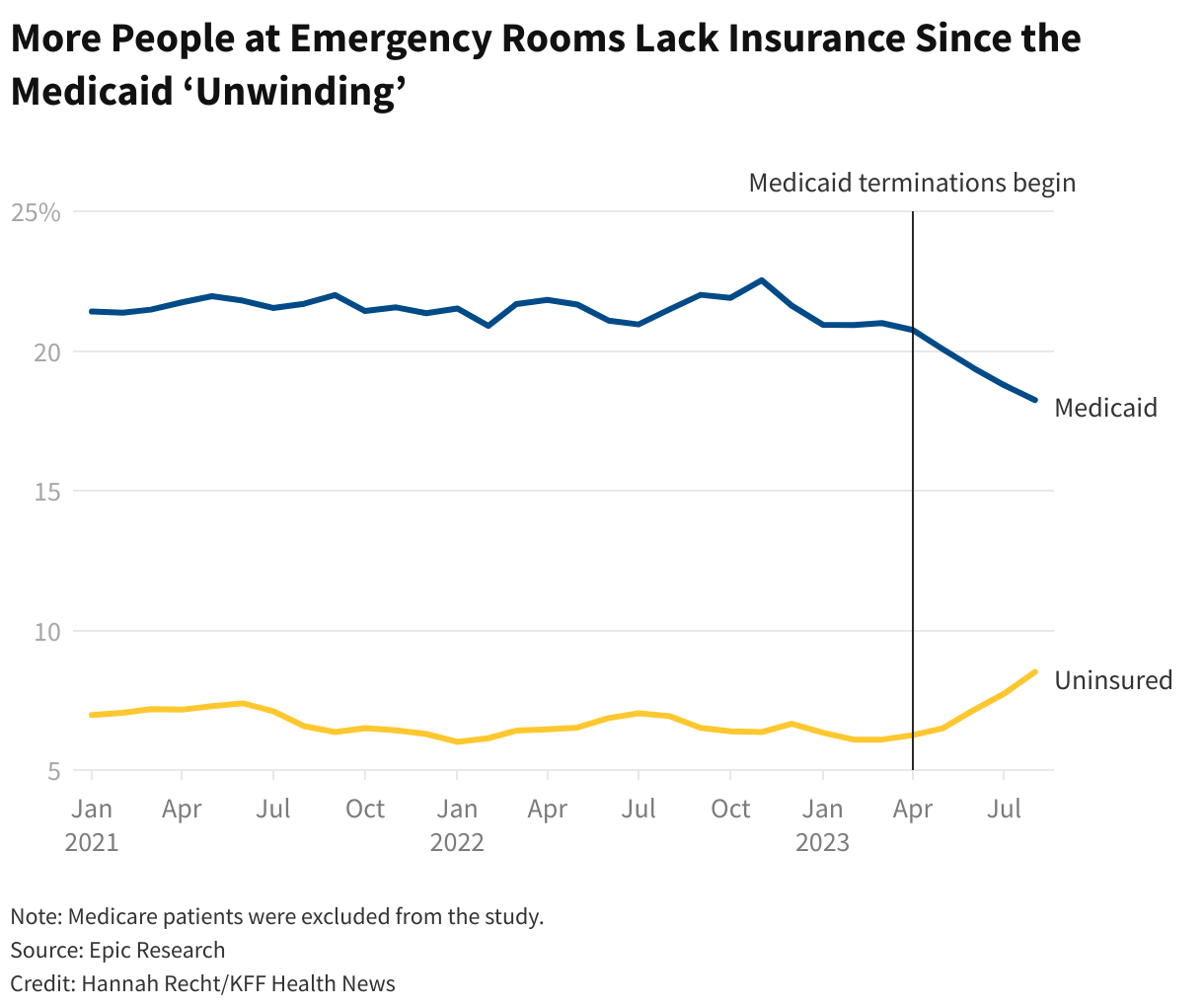
Nationwide, there are other signs that many people dropped from Medicaid are winding up uninsured. Epic Research, a division of the electronic medical records company, Nov. 17 showing that uninsured emergency room visits increased substantially this summer, after the unwinding began.
The researchers examined ER records from nearly 1,300 hospitals. They found that the self-pay rate among patients increased from 6.1% in March to 8.5% in August ��� the highest rate observed since the first weeks of the pandemic.
Even before the pandemic, it was typical for many people who lost Medicaid coverage to go without insurance for a time, said Robin Rudowitz, a Medicaid policy researcher and vice president at KFF. ���We do know from earlier research that following a disenrollment from Medicaid, two-thirds of people had a period of uninsurance over the course of the following year,��� she said.
So Utah���s survey results ��� showing about a third of disenrolled people lack insurance ��� is ���not outlandish, but it is very concerning,��� said Emily Zheutlin, a health policy analyst with the Utah Health Policy Project and a member of the state���s Medicaid advisory board.
She said people in the state have had difficulty renewing their Medicaid coverage, with long wait times on calls to the state Medicaid agency. Many people also don���t know they need to reverify their eligibility, she said.
Without health coverage, people may delay seeking needed care or be left with unaffordable bills when they get it.
Rachel Craig, government affairs manager for the Association for Utah Community Health, which represents community health centers, had feared up to half of those disenrolled from Medicaid would be uninsured.
���This is better than expected, though it���s still a big number,��� she said.
But she said the state���s survey could be skewed because people with insurance may be more likely to respond than people who are uninsured.
窪蹋勛圖厙 News data journalist Hannah Recht contributed to this report.
窪蹋勛圖厙 News is a national newsroom that produces in-depth journalism about health issues and is one of the core operating programs at KFF���an independent source of health policy research, polling, and journalism. Learn more about .