WILLIAMSTON, N.C. 鈥� Two years after her brother鈥檚 death, Debra Pierce still wonders whether the 50-year-old would have survived his heart attack if her local hospital hadn鈥檛 closed.
鈥淭he sad thing is we鈥檒l never know if he could have been saved that night or not, because we don鈥檛 have a higher level of care in this county,鈥� Pierce said as she stood outside the mobile home where she last hugged her brother.
Emergency crews from a neighboring town worked on Stanley Sears for a half hour but couldn鈥檛 revive him for the long drive to the closest hospital, records show.
In the tall grass 鈥� which would be mowed if Sears were still alive 鈥� Pierce swiped through the photos on her phone. She stopped at a picture that showed Sears smiling. Pierce chuckled and then sighed: 鈥淏less him.鈥�

The local hospital had closed a year before Sears鈥� death, leaving behind a gutted healthcare system. Martin County does not have paramedics on its ambulances, and it can be 20 miles or more to the closest 鈥� and often overcrowded 鈥� emergency rooms.
The healthcare gaps in Martin County illustrate the finite reach of a $50 billion rural health fund that Republicans crafted to strengthen support for President Donald Trump鈥檚 signature tax and spending measure, the One Big Beautiful Bill Act, last year. Though the cash has not been doled out, Republican candidates in competitive midterm elections 鈥� including the closely watched battle for the congressional district that encompasses Martin County 鈥� are casting the fund as a lifeline that will shore up critical rural health services across America.
The money has been highly anticipated in North Carolina, where most residents live in rural counties. Pierce, a Republican who blames county officials for the hospital closure, said she has faith Trump will help them. 鈥淥ld man鈥檚 doing his job up in there,鈥� she said.
On paper, Martin County 鈥� home to about 22,000 people 鈥� looks like a top contender to receive at least some of the $213 million that鈥檚 been earmarked for North Carolina.
Yet County Manager Drew Batts said it won鈥檛 be the answer for his residents.
鈥淭he $50 billion is not something that is specifically going to help our situation,鈥� Batts said as he walked into the shuttered hospital in April. 鈥淚t鈥檚 not going to help us get this place reopened.鈥�
Martin County won鈥檛 get direct relief from Trump鈥檚 rural health fund 鈥� because its hospital isn鈥檛 open. North Carolina is distributing the money among existing health and social service organizations. Plus, federal regulators on how much can be spent on construction and building renovations.

鈥榃e Can Only Pray鈥�
Martin General Hospital closed abruptly in 2023, surprising employees and shocking patients, who had to be wheeled out on stretchers and transported elsewhere to finish treatment. The closure even stunned local elected leaders, who say the company operating the county-owned hospital, Quorum Health, did not notify them it intended to shut down operations and file for bankruptcy. Quorum spokesperson Lisa Anderson said the company had told county commissioners of the hospital鈥檚 ongoing financial challenges.
Politicians have spent the years since trying to reopen the hospital, with county taxpayers pouring an estimated $2.9 million into maintenance, utilities, and other costs in the hopes of resuming operations, Batts said.
The county is now considering spending at least $1.5 million, he said, to create two higher-level paramedic units with quick-response vehicles, specially equipped with electrocardiogram equipment or other 鈥渁dvanced lifesaving support.鈥�
Pierce said she is praying the county can add paramedics and reopen the hospital.
鈥淭here鈥檚 some answered prayers happening every day,鈥� she said. 鈥淪o, we can only pray and hope, you know?鈥�

鈥楾hey Just Want To Not Die鈥�
With its nine hospitals, the region鈥檚 largest health system is ECU Health, connected to East Carolina University. The system has become a de facto safety net for 29 counties. Batts and Brian Floyd, the Greenville-based system鈥檚 chief operating officer, have lobbied state and federal lawmakers, walking them through the shuttered hospital and asking for help.
鈥淚t鈥檚 a real healthcare crisis that has already proven itself to have lost lives that perhaps didn鈥檛 have to be lost,鈥� Floyd said. 鈥淭hey just want to not die because there鈥檚 nowhere to go when you have an emergency.鈥�
Eleisa Ann Evans drove 2陆 hours from a small town near the Outer Banks on a recent evening so her aunt could get care at an ECU Health ER in Greenville. Once there, Evans said, staff told her to leave her 79-year-old aunt in the waiting room and wait outside because of capacity issues.
Evans said she was outraged at the way the staff treated her. She said she had been standing behind her aunt鈥檚 wheelchair while inside and 鈥渨asn鈥檛 using nobody鈥檚 chair.鈥�
With Martin General gone, all the surrounding counties are 鈥渁lso in jeopardy,鈥� Floyd said. 鈥淣o one knows what to do鈥� with that large of a healthcare 鈥渄esert,鈥� he said.
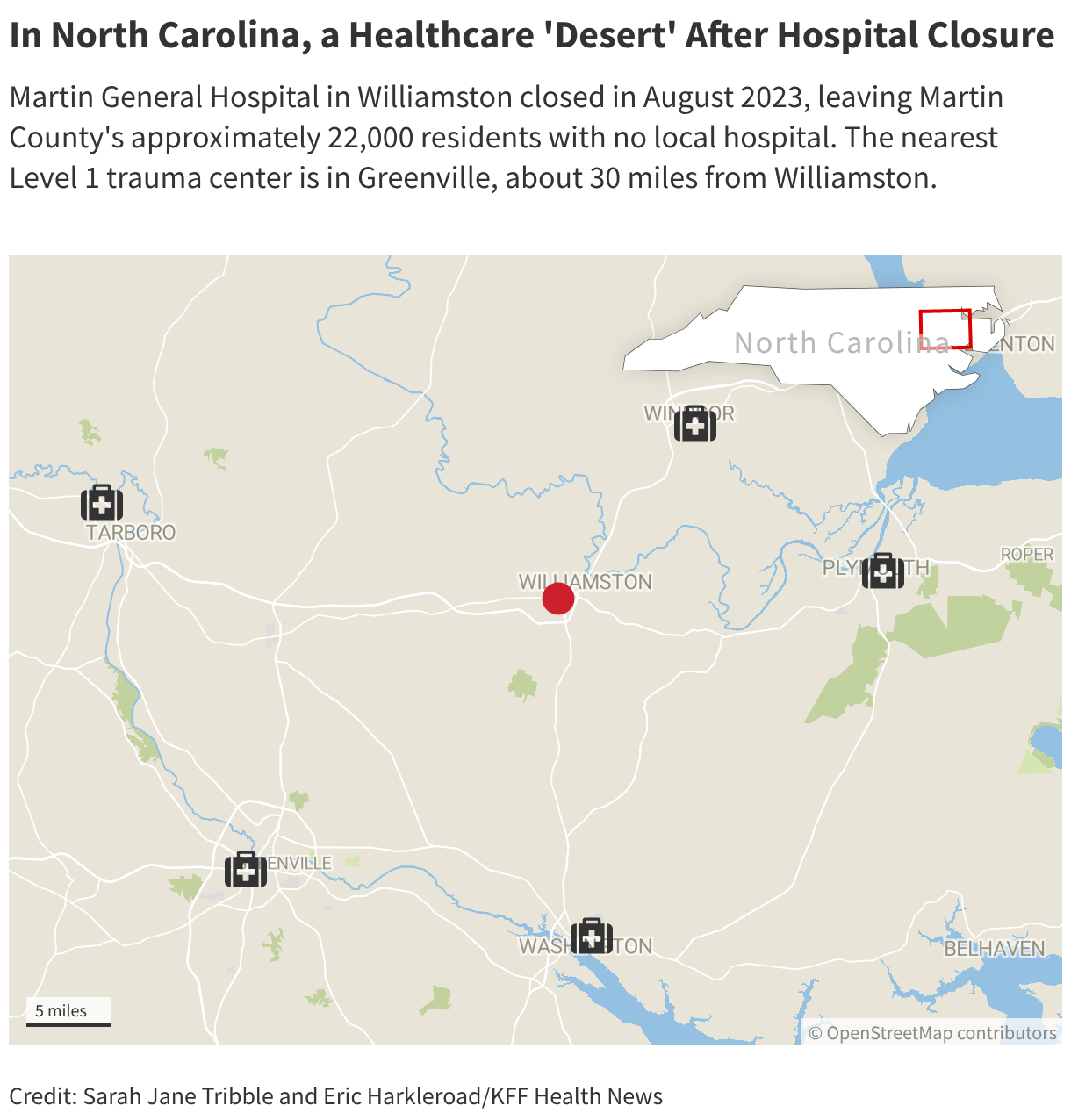
What healthcare is left in the county includes one urgent care center, run by a private company, and a nonprofit health clinic, operated by Agape Health Services, which accepts patients from five counties and plans to build another primary care clinic to meet demand.
ECU Health signed a letter of intent to reopen Martin General as a rural emergency hospital that would provide outpatient care as well as an ER. Under the terms of the deal, Martin County would pay to refurbish the hospital, and the North Carolina General Assembly would have to give ECU Health $210 million, of which $150 million would pay for the construction of a new inpatient tower at ECU鈥檚 Beaufort Hospital.
The health system, through its affiliate , won a portion of North Carolina鈥檚 $213 million first-year payout from the rural fund. But the federal money can鈥檛 be used to reopen Martin General, Floyd said.
The five-year Rural Health Transformation Program is slated to be delivered in $10 billion annual increments to states, which applied and competed for the money.
North Carolina鈥檚 plan creates a that allots money to six large regional leads, including nonprofits such as Access East. Those hubs will distribute money to local entities and coordinate broad initiatives such as improving primary care and fortifying the healthcare workforce, as well as developing 鈥渄igital solutions,鈥� according to the state鈥檚 .
An Election Issue
The lack of emergency care in the region has emerged as a top talking point in a close U.S. House race between Rep. Don Davis, a Democrat who represented the district when Martin General closed and is seeking his third term, and Republican Laurie Buckhout.
The rural health fund was added at the last minute in 2025 to win votes for the One Big Beautiful Bill Act, which is expected to reduce federal Medicaid spending by more than $900 billion over a decade 鈥� cuts that are projected to hit rural hospitals and clinics especially hard. Rural health executives say the fund won鈥檛 come close to offsetting those losses.
Matt Mercer, a spokesperson for the North Carolina Republican Party, called the rural fund a 鈥渙nce in-a-generation opportunity鈥� for the state.
But U.S. Sen. Thom Tillis, who was one of three Republican senators to vote against the bill 鈥� and who announced shortly before the final vote that he planned to retire from Congress 鈥� warned of devastating consequences ahead for healthcare in his state.
Buckhout, who declined an interview, plans to attack Davis 鈥� a vulnerable incumbent whose district was recently redrawn to favor GOP candidates 鈥� for voting against the bill.
鈥淢artin County lost its hospital on his watch, and he still opposed the funding meant to help communities like it,鈥� Buckhout campaign spokesperson Stephen Gallagher said in a statement to 黑料吃瓜网 News. The campaign did not respond to additional queries about her plans for healthcare access, if elected.

Davis, who signed from lawmakers in support of North Carolina鈥檚 rural health fund application, said the money 鈥渋s essentially putting a band-aid on a much, much broader situation that needs dire help.鈥� He has that would increase Medicaid reimbursements for rural hospitals, though it has not moved forward.
During recent testimony on Capitol Hill in Washington, ECU Health CEO Michael Waldrum said his system expects to lose a billion dollars over the next 10 years from the looming Medicaid cuts.
Overnight Waits for Emergency Care
The region鈥檚 emergency rooms offer a stark glimpse of a healthcare system in crisis.
Martin General鈥檚 ER treated annually before it closed, according to state data. A sign still hangs in the staff break room showing that 23 patients were seen in the ER the day it closed.
ECU Health, which owns all but one of the rural hospitals around Martin General, reported a 132% increase in its daily ER visits since the hospital鈥檚 closure. The company's nearly 1,000-bed hospital in Greenville, about 40 minutes from Williamston, is the state鈥檚 only Level 1 trauma center east of Raleigh.
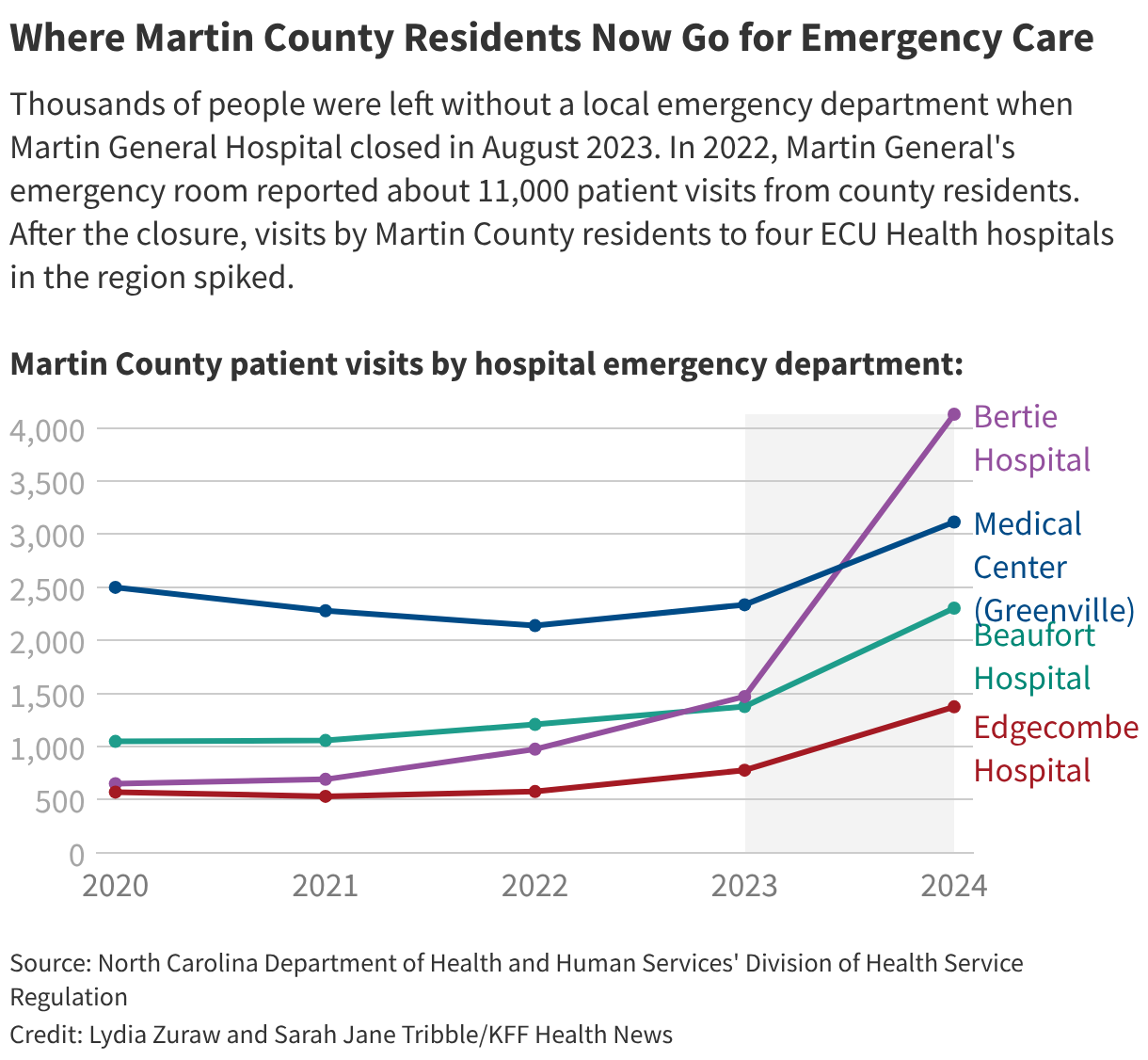
The Greenville hospital鈥檚 median patient ER wait and treatment time was nearly 4陆 hours, according to the most . That鈥檚 longer than 96% of thousands of hospitals reporting nationwide. The wait times 鈥渄on鈥檛 reflect poor care,鈥� ECU Health spokesperson Brian Wudkwych said in an emailed statement. He said the system鈥檚 ERs treat nearly 300,000 patients annually.
While the system has seen an increase in Martin County patients, the wait times primarily stem from shortages of inpatient and behavioral health beds, Wudkwych said.
Floyd, the ECU Health chief operating officer, said many rural patients who arrive at the system鈥檚 ERs have multiple chronic conditions that require longer visits. Often doctors start treating one problem and then find the patient鈥檚 鈥渂lood sugar is out of control, your hypertension is far out of control,鈥� he said.
ECU staff encourage people who are not too sick to skip Greenville and, instead, seek care at one of the system鈥檚 community hospitals, which aren鈥檛 as busy, Floyd said.
A security officer guarded the Greenville emergency department鈥檚 doors on two nights in April. The 鈥渃apacity notice鈥� sign near the entrance meant family members of patients had to wait in cars or on benches outside.
鈥淲e鈥檝e only been here six hours,鈥� Tonya Miles said after bringing her mother for a potential blood clot in her leg. The family had left the day before after waiting for two hours, because her mom 鈥渨asn鈥檛 prepared鈥� for such a delay in treatment, Miles said.

On another evening, Olivia Lewis said she had brought her mother two nights previously and left without care after their wait stretched from 10:30 p.m. to 7 a.m.
鈥淪he tore off her hospital bracelet and said: 鈥業鈥檓 out. I鈥檓 done,鈥欌�� she said. Now, they were back.
On a recent Friday in Martin County, Vannessa Little was sitting at a McDonald鈥檚 with her kids just down the street from the closed hospital. Little pointed to one of her girls and wondered how her care would have been different if the hospital had been open.
Her daughter, then 6, suffered severe burns over 30% of her body in 2024, and the journey to treatment was 鈥渏ust crazy,鈥� Little said. An ambulance arrived at her Williamston home from neighboring Bertie County to transport them to ECU鈥檚 Greenville ER.
鈥淭hat was a long time,鈥� Little said of the 30-mile drive. The girl was ultimately airlifted more than 100 miles to Chapel Hill. Little said she hadn鈥檛 heard of Trump鈥檚 rural health investment. 鈥淭he only changes that people are making is they鈥檙e taking away everything.鈥�
She voted against Trump in 2024 and said she didn鈥檛 think she would vote this year.
鈥淚t鈥檚 a waste of my time.鈥�
黑料吃瓜网 News is a national newsroom that produces in-depth journalism about health issues and is one of the core operating programs at KFF鈥攁n independent source of health policy research, polling, and journalism. Learn more about .